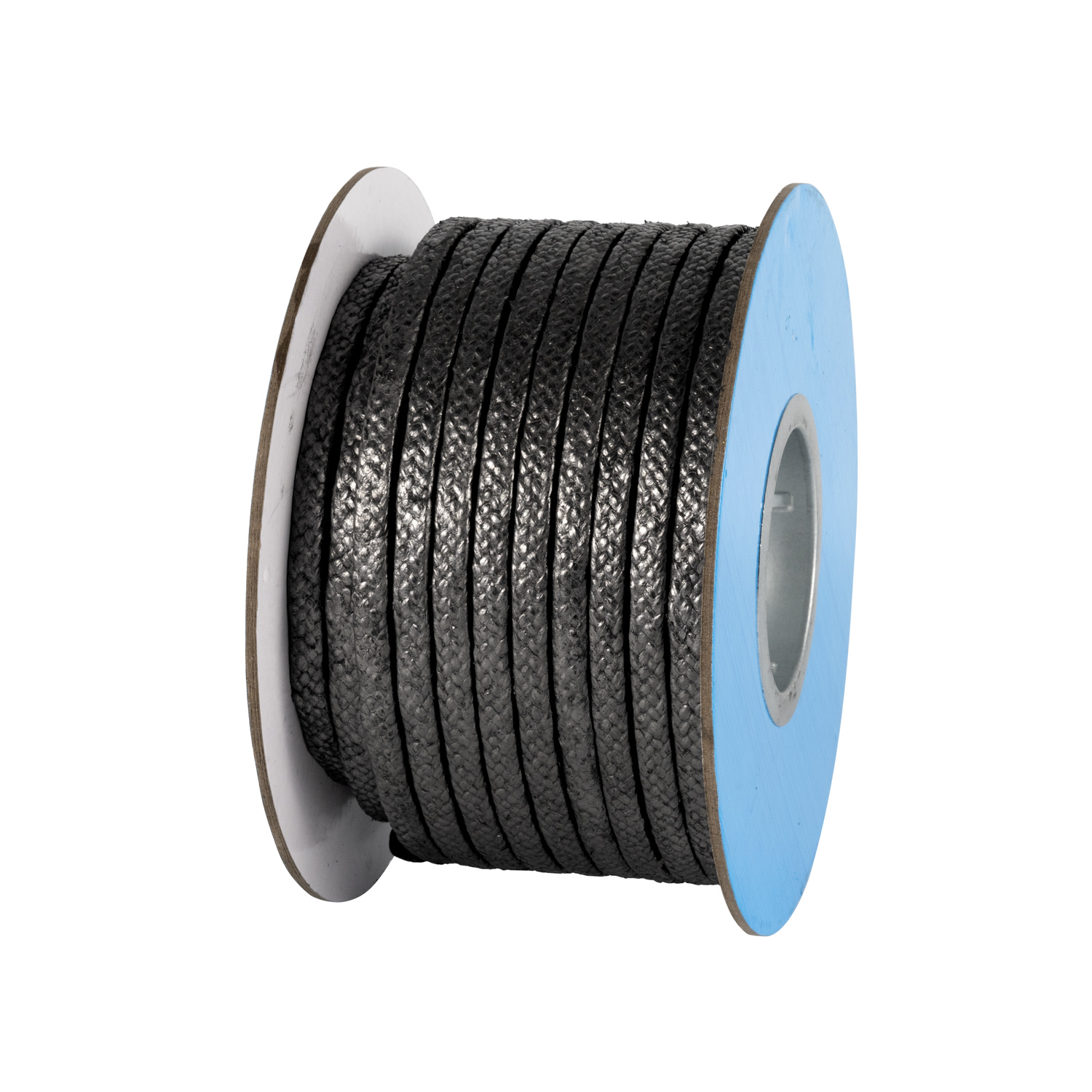
Engineered to seal,
The last line of defense against leakage
+86-13566064802

Views: 0 Author: Site Editor Publish Time: 2026-10-12 Origin: Site
High-temperature valve leaks cause fugitive emissions, safety hazards, and unplanned downtime. Plant operators rely on Graphite Gland Packing as the standard for high-temperature and high-pressure sealing. However, standard graphite degrades under specific thermal, chemical, and mechanical stresses. Maintenance teams often face recurring leaks because they apply standard materials to extreme environments without understanding the operational limits. This diagnostic guide identifies the root causes of packing failure. We will evaluate engineered solutions and establish a decision framework for specifying the correct sealing architecture. Valve sealing requires precision. When you understand the mechanical limits of your sealing materials, you can stop reacting to blowouts and start preventing them. This guide provides field-tested strategies to keep your high-temperature valves leak-free and compliant with environmental regulations.
Thermal oxidation is the primary failure mode for standard graphite above 850°F (454°C) in oxidizing environments, leading to volume loss and immediate seal degradation.
Mechanical extrusion occurs when system pressure forces graphite into the clearances between the stem and the stuffing box, requiring anti-extrusion end rings for mitigation.
Improper consolidation during installation accounts for a significant percentage of premature leaks; precise torque procedures and live-loading systems are critical for long-term reliability.
Material selection and configuration must balance purity, oxidation inhibitors, and reinforcement types (e.g., wire mesh) within an optimized ring stack-up to meet specific friction and actuation requirements.
Table of Contents
Valve sealing relies on radial expansion. You apply axial compressive load by tightening the gland nuts. The gland follower transfers this mechanical force downward through the packing rings. Because flexible graphite is a semi-elastomeric material, it responds to this axial compression by expanding radially. The material pushes outward against the stuffing box wall and inward against the valve stem. This radial pressure blocks the system media from escaping. Maintaining this compressive load is mandatory. If the axial force drops, the radial expansion decreases, and a leak path forms immediately. Friction against the stuffing box wall absorbs some of this force, meaning the top ring receives the most compression while the bottom ring receives the least.
A single type of packing ring rarely handles all mechanical and sealing requirements. Engineers typically specify a 5-ring stack-up for standard isolation valves. Mixing braided and die-formed rings optimizes both mechanical stability and sealing performance. You must install these rings in a specific order to achieve a reliable seal.
Bottom Braided End Ring: Acts as a wiper and anti-extrusion barrier at the base of the stuffing box.
First Die-Formed Ring: Provides primary impermeable sealing against the stem.
Second Die-Formed Ring: Adds depth to the primary seal and absorbs radial expansion forces.
Third Die-Formed Ring: Completes the primary sealing section.
Top Braided End Ring: Prevents the softer middle rings from extruding upward past the gland follower.
Manufacturers provide baseline capabilities for flexible graphite. Spec sheets often rate standard graphite up to 1200°F (650°C) in steam or reducing environments. These limits drop drastically in oxidizing media. Real-world conditions rarely match controlled laboratory tests. Valves experience operational spikes, rapid thermal cycling, and sudden pressure transients. A steam line might operate at 800°F normally but spike to 950°F during process upsets. These thermal shocks cause the valve components to expand and contract at different rates. This movement alters the compressive load on the packing, pushing standard materials beyond their practical limits and causing premature failure.
Thermal oxidation is a major cause of graphite packing failure in high-temperature environments containing oxygen. Oxidation rates depend on temperature, exposure duration, graphite purity, and material formulation. As graphite gradually loses mass, the packing may lose sealing stress and develop leakage paths.
The SGL Carbon SIGRAFLEX flexible graphite material range illustrates how different graphite grades provide varying levels of oxidation resistance for industrial sealing applications.
Selecting an appropriate graphite grade and maintaining proper packing compression can help reduce premature sealing failure.
Mechanical extrusion happens when system pressure overwhelms the physical structure of the packing. High system pressures push the soft, die-formed graphite upward or downward. If the diametrical clearances between the stem and the stuffing box bottom exceed 0.015 inches, the graphite flows into these gaps. The material extrudes out of the gland much like toothpaste squeezed from a tube. You will often see black graphite flakes accumulating on the valve stem above the gland follower. This physical breakdown destroys the integrity of the seal. Without proper braided end rings to block these clearance gaps, even the highest quality die-formed rings will extrude and fail under high pressure.
Graphite sits at the noble end of the galvanic series. Stainless steel valve stems are less noble. When you introduce an electrolyte, you create a galvanic cell. Moisture trapped in the stuffing box acts as this electrolyte. This moisture often comes from hydro-testing, atmospheric humidity during storage, or condensation during system shutdowns. The electrochemical reaction causes the less noble stainless steel stem to corrode. Severe pitting develops on the stem surface, resembling frosted glass or deep craters. When operators actuate the valve, these sharp pits act like a cheese grater. They tear the graphite rings apart, destroying the seal from the inside out.
While graphite resists many chemicals, specific high-temperature media cause rapid degradation. Aggressive thermal oils, strong oxidizers, or certain acids attack the material. Lower-quality packing often contains binders, fillers, or impregnants to aid the manufacturing process. These secondary materials possess lower chemical resistance than the graphite itself. When high-temperature media dissolves or burns out these binders, the packing matrix collapses. The rings lose their structural density. They shrink, lose compression, and allow the aggressive media to escape into the atmosphere. You must verify the chemical compatibility of the entire packing matrix, not just the base graphite.
Human error causes a massive percentage of packing failures. Installers must seat each ring individually using a split tamping tool. Dropping all five rings into the box and tightening the gland follower fails to distribute the load. The top ring takes all the compression, while the bottom rings remain loose. Uneven gland nut torque pulls the follower out of alignment. This causes the follower to rub against the stem, generating extreme friction and scoring the metal. Over-compressing the packing crushes the graphite, eliminating its natural flexibility and causing immediate actuator stall.
Packing degradation often begins before installation. Graphite absorbs moisture if left in humid environments. Storing packing boxes on wet concrete floors or leaving them open to the elements compromises the material. Physical damage during handling also ruins the rings. Bending die-formed rings too far cracks the graphite matrix. Dropping braided rings frays the edges. Installing compromised materials guarantees a shortened lifespan. The absorbed moisture accelerates galvanic corrosion upon startup, while physical cracks create immediate leak paths under pressure. Always store packing in a climate-controlled environment and handle the rings with clean gloves.
Identifying failures early prevents catastrophic blowouts. Visual cues provide the first warning. Look for steam plumes, dripping condensate, or chemical residue around the gland follower. Acoustic leak detection tools identify high-frequency sounds generated by pressurized gas escaping through micro-leaks. For volatile organic compounds, technicians use EPA Method 21 emission sniffing. Portable flame ionization detectors measure the exact concentration of escaping gases in parts per million. Regular diagnostic sweeps allow maintenance teams to schedule repacking during planned outages rather than reacting to emergencies. Catching a leak at 500 PPM is far better than waiting for a visible blowout.
Fugitive emissions carry severe regulatory consequences. Facilities must comply with strict environmental standards like API 622, API 624, and ISO 15848-1. These standards dictate allowable emission thresholds for valve packing. Exceeding these limits triggers immediate regulatory scrutiny. Plants face heavy financial fines for non-compliance. Repeated violations lead to forced unit shutdowns or mandatory consent decrees from environmental agencies. Maintaining a tight seal is a strict legal requirement for operating chemical and petrochemical facilities. You must document your emission levels and prove that your sealing architecture meets the required standards.
Emergency valve repacking requires immense logistical support. Maintenance teams must erect scaffolding to reach elevated valves. Insulation contractors must remove and later reinstall thermal lagging. The labor hours multiply quickly. Isolating a leaking valve often requires shutting down an entire process line. The lost production yield during this unplanned downtime heavily impacts facility operations. Repacking a single high-pressure steam valve in the middle of a production run disrupts the entire plant schedule. Preventing these failures through proper material selection keeps the plant running smoothly and reduces the burden on the maintenance department.
Catastrophic packing blowouts release high-temperature steam or hazardous chemicals directly into the work environment. This poses severe safety risks to plant personnel. Exposure to 900°F steam causes immediate, fatal injuries. Toxic chemical releases require plant evacuations and emergency hazmat responses. Beyond safety, continuous leaks represent direct yield loss. Every pound of escaping steam requires additional fuel at the boiler to replace. Every gallon of lost process fluid reduces the final product volume. Stopping these leaks directly improves the thermal efficiency of the plant and protects the workforce from hazardous exposure.
High-purity and oxidation-resistant graphite materials can improve packing durability in demanding high-temperature valve applications. Material selection should consider oxidation resistance, graphite purity, reinforcement, and operating conditions.
For example, SGL Carbon's SIGRAFLEX graphite materials for valve packing include specialized graphite foil yarns and reinforced materials developed for demanding sealing environments.
However, improved oxidation resistance does not eliminate temperature limitations. Engineers should verify the material's published performance data and its suitability for the valve's operating conditions.
Relying solely on standard braided graphite invites extrusion. High-pressure applications require wire-reinforced braided end rings. Manufacturers weave fine Inconel or stainless steel wires directly into the graphite yarn. These reinforced rings possess immense mechanical strength. Placed at the top and bottom of the stuffing box, they act as impenetrable barriers. They prevent the soft, die-formed middle rings from extruding through the clearance gaps. The die-formed middle rings provide the low-friction, high-density seal against the stem, while the wire-reinforced end rings provide the structural cage. This combination handles pressures exceeding 4500 psi.
Thermal cycling causes valve components to expand and contract. This movement relaxes the initial torque applied to the gland nuts. Live-loading solves this problem. You install a stack of Belleville spring washers under the gland nuts. These engineered springs store mechanical energy. As the packing consolidates or the valve cools and contracts, the springs expand. They maintain a continuous, calculated compressive force on the gland follower. Live-loading compensates for in-service relaxation. It eliminates the need for manual retorquing and prevents leaks caused by thermal transients. You can stack the washers in series to increase travel or in parallel to increase load.
To combat galvanic corrosion, premium packing sets incorporate passive corrosion inhibitors. Manufacturers embed active zinc dust or apply proprietary anodic coatings directly into the graphite matrix. Zinc is less noble than both graphite and the stainless steel valve stem. When moisture enters the stuffing box, the zinc acts as a sacrificial anode. The galvanic reaction attacks the zinc instead of the valve stem. This sacrificial protection preserves the smooth surface finish of the stem. It prevents the pitting that would otherwise shred the packing during valve actuation. This is especially important for valves that sit idle after hydro-testing.
Selecting the correct packing requires cross-referencing three variables: maximum operating temperature, system pressure, and media chemistry. Never rely on average operating conditions. You must specify packing based on the maximum transient spikes the valve will experience. Determine if the media is oxidizing or reducing. High pressure demands wire reinforcement. High temperatures in oxidizing media demand inhibitors. Failing to map these three variables against the packing specifications guarantees premature failure. Create a standardized matrix for your facility that dictates exactly which packing material corresponds to specific temperature and pressure classes.
Valve function dictates packing configuration. Isolation valves remain static for long periods. They only actuate fully open or fully closed. These valves tolerate high consolidation forces and dense packing sets. Control valves constantly modulate to regulate flow. They require highly engineered, low-friction packing sets. High friction in a control valve causes stick-slip. The actuator struggles to move the stem, then suddenly overshoots the target position. Control valve packing must balance adequate radial expansion with minimal stem drag to ensure precise process control. You cannot use the same packing arrangement for both valve types.
Engineers constantly balance sealability against friction. Achieving a completely leak-free seal requires high axial compression. High compression squeezes the graphite tighter against the stem, increasing friction. If you over-tighten the packing, the valve actuator may stall. The stem might refuse to move, or the motor might burn out trying to overcome the drag. You must calculate the available thrust of the actuator. Select a packing configuration that seals effectively below the maximum allowable friction threshold of the specific valve actuator. Sometimes this requires reducing the number of sealing rings to lower the total stem drag.
Comparison of Valve Packing Requirements | ||
Parameter | Isolation Valves (Gate/Globe) | Control Valves (Modulating) |
|---|---|---|
Primary Function | On/Off isolation | Precise flow regulation |
Friction Tolerance | High | Very Low (Must avoid stick-slip) |
Typical Ring Count | 5 to 7 rings | 3 to 5 rings (to minimize drag) |
Consolidation Force | High compression acceptable | Precisely calculated compression |
Live-Loading | Recommended for thermal cycling | Mandatory for consistent friction |
Audit your high-temperature valves using EPA Method 21 to identify and document all current fugitive emission leaks.
Upgrade your material specifications to require oxidation-inhibited graphite for all oxidizing services operating above 850°F.
Install Belleville spring live-loading systems on all valves subjected to frequent thermal cycling or rapid pressure transients.
Equip your maintenance personnel with calibrated torque wrenches and enforce documented, multi-step tightening procedures for every installation.
Measure stuffing box clearances during your next outage and machine any valves that exceed the manufacturer's maximum extrusion tolerances.
A: In steam or reducing environments, flexible graphite handles temperatures up to 1200°F (650°C). In oxidizing environments like air, standard graphite degrades rapidly at 850°F (454°C). You must specify oxidation-inhibited graphite to exceed this threshold safely and prevent mass loss.
A: Thermal oxidation is a chemical reaction where solid carbon reacts with oxygen at high temperatures to form carbon dioxide gas. This causes the graphite to burn away. The resulting mass loss leaves voids in the stuffing box, eliminating compressive load and creating a direct leak path.
A: Die-formed rings are compressed from flexible graphite ribbon into high-density, solid rings that provide the primary impermeable seal. Braided rings are woven from graphite yarn, often reinforced with wire. Braided rings act as anti-extrusion barriers at the top and bottom of the packing set.
A: The industry standard is a 5-ring configuration consisting of two braided end rings and three die-formed middle rings. Exceeding 7 rings is discouraged. Additional rings suffer from diminishing returns in force transfer and only increase unwanted friction on the valve stem.
A: Prevent extrusion by installing high-density, wire-reinforced braided carbon or graphite end rings at the top and bottom of the packing set. These reinforced rings act as physical barriers, blocking the clearance gaps and keeping the softer die-formed sealing rings contained under high pressure.
A: Install live-loading Belleville spring washers on valves that experience frequent thermal cycling, rapid pressure spikes, or heavy vibration. It is also recommended for valves located in hard-to-reach areas where manual retorquing by maintenance personnel is difficult or dangerous.