No.67,Xinhua Road, Xiaolin Town,
Cixi City,Zhejiang,China 315300
Call Us
+86-13566064802

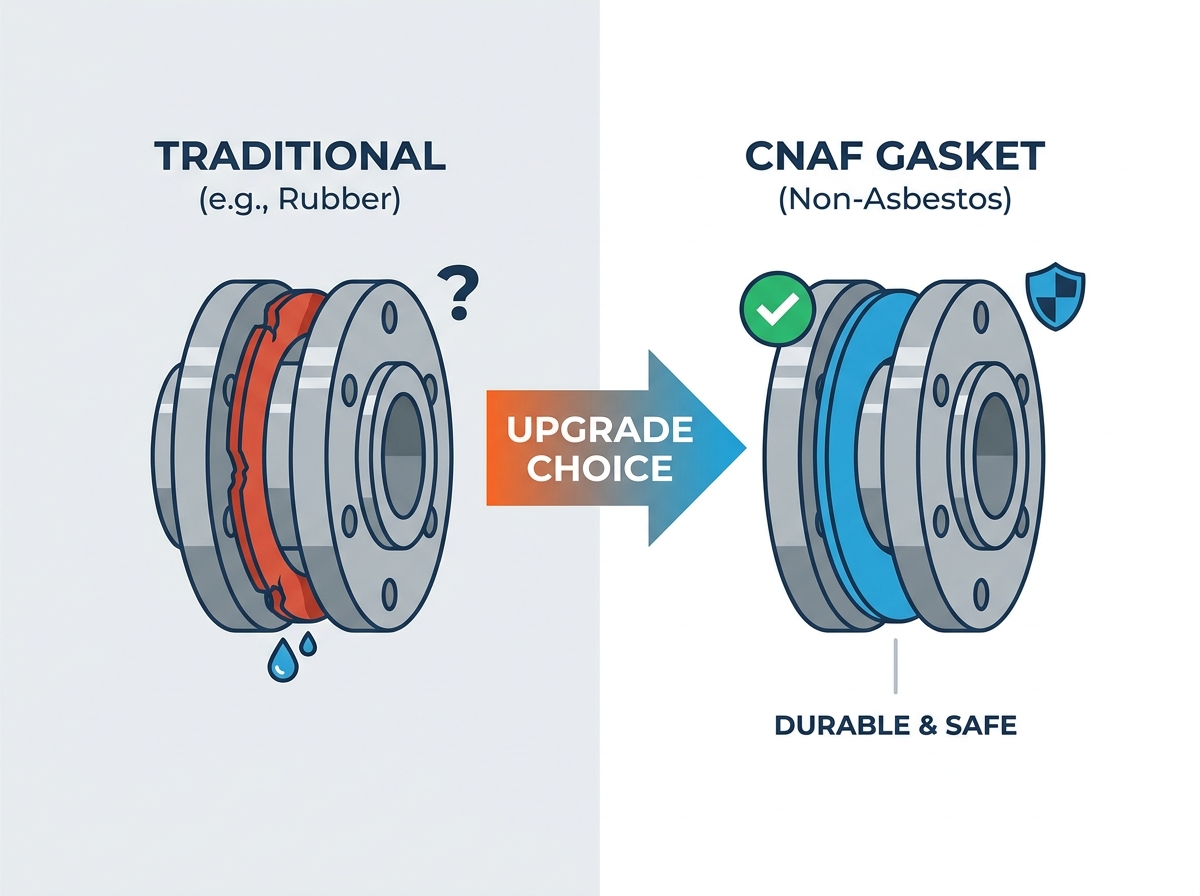
The industrial phase-out of asbestos forced engineers to find sealing materials that matched historical performance without health hazards. This shift led to the standardization of the cnaf gasket across mechanical and plumbing systems. Specifying soft gaskets requires balancing operational safety with material capabilities. Over-specifying wastes budget, while under-specifying risks blowouts, fugitive emissions, and unplanned downtime. To determine if a cnaf gasket fits a specific piping system, you must evaluate its fiber-binder composition. Engineers need to verify its classification as a non-metallic flat gasket and check compliance against the application's pressure-temperature ratings, chemical media, and flange design. Selecting the right material prevents fluid leaks and ensures environmental compliance on the plant floor.
Material Definition: CNAF stands for Compressed Non-Asbestos Fiber, a non-metallic composite material combining reinforcing fibers (aramid, glass, carbon, or mineral) with an elastomeric binder (NBR, EPDM, SBR).
Optimal Use Case: CNAF gaskets are engineered for low-to-moderate pressure and temperature applications, widely used in plumbing, commercial mechanical systems, and utility lines handling water, steam, oils, and mild chemicals.
Specification Driver: The chemical compatibility and thermal limit of a CNAF gasket are primarily dictated by its synthetic rubber binder, not just the reinforcing fiber.
Design Constraints: Successful implementation requires specific flange surface finishes, adequate seating stress, and strict adherence to dimensional tolerances during fabrication (e.g., maintaining sensible web thickness between bolt holes to prevent structural failure).
Table of Contents
Understanding the internal structure of a compressed non-asbestos fiber gasket helps predict its behavior under load. The manufacturing process relies on calendering. Large heated rollers compress a mixture of synthetic fibers, elastomeric binders, and fillers into uniform, dense sheets. This high-pressure rolling aligns the fibers, creating a strong matrix that resists lateral extrusion when compressed between two flanges.
Industry standards classify these products as non-metallic flat gaskets. They fall under strict dimensional and performance guidelines. Standards like ASME B16.21 dictate the exact dimensions for gaskets fitting ASME B16.5 pipe flanges. European systems rely on EN 1514-1 for similar dimensional standardization. These codes ensure that a gasket cut from a standard sheet will perfectly align with the bolt circles and bore sizes of standard piping infrastructure.
The structural backbone of the material comes from its reinforcing fibers. These fibers prevent the gasket from blowing out under internal pressure. Manufacturers select different fibers based on the target application.
Aramid Fibers: These offer high tensile strength and excellent flexibility. They serve as the standard choice for general-purpose sealing across most utility applications.
Glass Fibers: Glass reinforcement provides enhanced temperature resistance and high compressive strength. It maintains excellent chemical stability in aggressive environments.
Carbon/Graphite Fibers: Engineers specify carbon fibers for higher temperature thresholds and aggressive media. They have electrical conductivity limitations in certain galvanic environments.
Mineral Fibers: These act as cost-effective filler fibers. They improve thermal resistance and stability under load without inflating the overall material costs.
While fibers provide strength, they cannot seal fluids on their own. The elastomeric binder fills the microscopic voids between the reinforcing fibers. It provides the necessary elasticity to conform to flange imperfections. The binder chemistry ultimately dictates the overall chemical resistance of the gasket.
NBR (Nitrile): This serves as the industry standard for sealing oils, fuels, solvents, and hydrocarbons. It resists degradation from petroleum-based fluids effectively.
EPDM: Engineers specify EPDM binders for water, steam, ketones, and mild acids or alkalis. It handles weathering and ozone exposure exceptionally well.
SBR/Neoprene: These binders are primarily utilized for general utility water pipelines, low-pressure plumbing, or specific refrigerant applications where chemical aggression is minimal.
Every soft sealing material operates within strict physical boundaries. The most critical metric for evaluating these limits is the Pressure-Temperature (P-T) rating. Soft gaskets exhibit an inverse relationship between pressure and temperature. As the system temperature increases, the maximum allowable operating pressure drops significantly. Heat softens the elastomeric binder, reducing its ability to hold back internal pressure.
Typical operational ceilings for these materials hover around temperatures up to 350°C (660°F) and pressures up to 100 bar. These maximums rarely apply simultaneously. A gasket might handle 100 bar at ambient temperature, but only 20 bar at 300°C. The specific grade, binder type, and material thickness heavily influence these actual limits.
Certifications validate the safety and reliability of sealing materials. They provide objective proof of performance for engineering specifications.
BS 7531 (Grade X and Grade Y): This British Standard defines the technical differences between high-specification (Grade X) and general-purpose (Grade Y) non-asbestos materials, focusing on thickness increase and gas permeability.
TA-Luft (VDI 2440): This certification dictates fugitive emission compliance. It ensures the gasket meets strict clean-air regulations by preventing volatile organic compounds from escaping into the atmosphere.
FDA & WRAS Compliance: These material safety standards govern food-contact and potable water applications. They are absolutely necessary for plumbing, municipal water systems, and pharmaceutical processing.
Matching the binder to the system media prevents premature failure. A robust framework for selection requires checking the manufacturer's chemical resistance chart. The binder must resist swelling, dissolving, or hardening when exposed to the fluid.
Certain media rapidly degrade standard compressed fiber materials. Highly concentrated acids, strong oxidizers, and liquid chlorine will attack the elastomeric binder. When handling these aggressive chemicals, engineers must select alternative materials like PTFE or specialized graphite.
Validating a selection requires analyzing manufacturer P-T charts. These charts typically divide performance into three distinct zones. The suitable zone means the gasket will perform reliably under those conditions. The consult manufacturer zone requires technical review based on specific flange conditions. The unsuitable zone indicates guaranteed failure. Always plot your maximum operating pressure and maximum operating temperature on these curves before finalizing a specification.
Selecting the right gasket requires comparing available technologies. No single material solves every sealing challenge. Understanding the trade-offs between different materials ensures reliable system performance.
PTFE offers superior chemical resistance across the entire pH scale (0-14). It handles highly aggressive acids and bases effortlessly. Pure PTFE is prone to creep and cold flow under load. It slowly deforms over time, requiring frequent bolt retorquing. Compressed fiber materials provide much better mechanical recovery and resistance to creep. They offer a more stable seal for mild chemicals and utility applications.
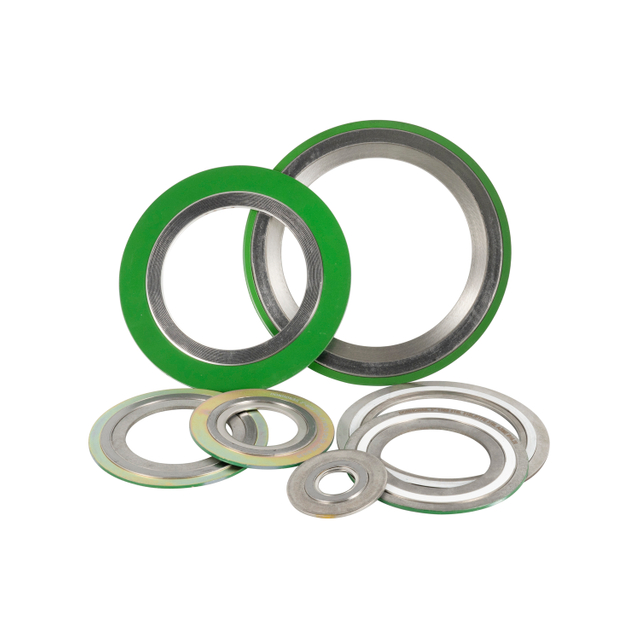
Spiral wound gaskets handle extreme high-pressure and high-temperature environments. They excel in systems subject to severe thermal cycling and pipe vibration. Compressed fiber gaskets are restricted to lower pressure classes, typically ASME Class 150 or 300. The major advantage of fiber materials is that they require significantly lower bolt loads to achieve an effective seal, making them suitable for lighter flanges.
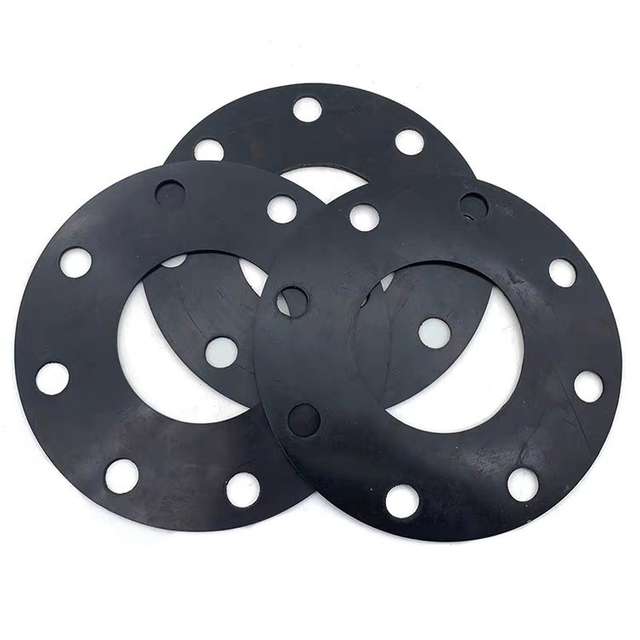
Pure rubber gaskets are excellent for low-bolt-load applications. They seal easily on flat-face non-metallic flanges like PVC, FRP, or glass-lined steel. Pure rubber lacks structural reinforcement. Compressed fiber materials offer higher temperature resistance, better pressure ratings, and superior blowout resistance because the internal fiber matrix provides mechanical strength.
Material Type | Best Application | Temperature Limit | Key Limitation |
|---|---|---|---|
Compressed Fiber | Water, Oil, Mild Chemicals | Up to 350°C | Binder chemical compatibility |
PTFE | Aggressive Chemicals (pH 0-14) | Up to 260°C | Creep and cold flow |
Spiral Wound | High Pressure / High Temp | Up to 1000°C | Requires high bolt load |
Pure Rubber | Plastic / FRP Flanges | Up to 120°C | Low blowout resistance |
The success of a joint depends heavily on flange conditions and fabrication quality. Even the highest quality sheet material will fail if the flange faces are improperly prepared or if the gasket is cut poorly.
Flange surface finish directly impacts sealing ability. The faces require a specific serration depth and roughness. The standard requirement typically falls between 125 to 250 microinches Ra. This concentric or phonographic grooving allows the soft material to bite into the flange face. The friction generated by this bite prevents lateral blowout under internal pressure.
Engineers must calculate the minimum seating stress required to compress the binder. The material must flow enough to fill microscopic flange imperfections. The calculation must respect the maximum allowable stress. Over-tightening the bolts will crush the fiber matrix, destroying the material's structural integrity and causing immediate failure.
The method used to cut the sheet material affects the final product's performance. Precision cutting ensures proper fitment and prevents structural weak points.
Waterjet Cutting: Highly recommended for complex geometries. It uses a high-pressure stream of water and abrasive. It prevents thermal degradation of the elastomer binder at the cut edge.
Die-Cutting: Efficient and highly cost-effective for high-volume standard shapes. It works perfectly for standard ASME B16.21 ring gaskets produced in large batches.
Laser Cutting: Requires careful calibration of power settings. If the laser is too hot, it causes localized burning or singeing of the synthetic binders, ruining chemical resistance at the inner diameter.
Design geometry plays a critical role in custom applications. Engineers must address the critical necessity of maintaining sensible web thickness between bolt holes and the outer or inner edges. Adequate web thickness prevents tearing during handling, installation, or assembly. Avoid designing extremely thin slivers or narrow seating areas around bolt holes. These narrow sections compromise structural integrity and prevent even seal load distribution.
Field installations present numerous variables that can compromise a joint. Identifying these risks early allows maintenance teams to implement effective mitigation strategies.
Binder degradation occurs when operating above the material's thermal limit or exposing it to incompatible chemicals. The binder breaks down, and the internal pressure extrudes the remaining fibers. Mitigation requires strict adherence to chemical resistance guides. For borderline applications, utilizing inner metal eyelets protects the internal diameter of the gasket from direct media attack and prevents erosion.
Torque loss happens due to the creep relaxation of the soft gasket material over time. This is especially prevalent under severe thermal cycling. Mitigation involves implementing controlled, multi-stage bolt-up procedures. Technicians should use an ASME PCC-1 star pattern tightening sequence. Scheduling hot-torquing or re-torquing routines after the initial startup ensures the joint maintains adequate compression.
Under continuous heat, the elastomeric binder can vulcanize directly to the metal flange. This sticking complicates future maintenance and requires aggressive face cleaning, which can damage the flange serrations. Mitigation involves specifying materials with factory-applied anti-stick coatings. Graphite, PTFE, or silicone release agents applied during manufacturing prevent this vulcanization.
With more than 20 years of sealing-industry craftsmanship, Ningbo Dongheng sealing develops and manufactures gasket, packing, and sealing-sheet solutions for mechanical, chemical, power, marine, food, pharmaceutical, and other industrial applications. Its ISO 9001-certified production system, in-house testing, OEM/ODM capabilities, and custom technical support help customers source reliable standard and non-standard sealing products.
Compile exact operating parameters including media, maximum temperature, maximum pressure, flange class, and flange face style.
Cross-reference the system media with the manufacturer's chemical compatibility chart to select the correct elastomeric binder.
Plot the maximum operating pressure and temperature on the manufacturer's P-T curve to verify the application falls within the safe zone.
Request specific Material Safety Data Sheets and technical data sheets from the manufacturer to finalize the specification.
Implement a controlled, multi-stage bolt-up procedure using a star pattern to ensure even seating stress during installation.
A: It stands for Compressed Non-Asbestos Fiber. It is a sealing material made by calendering a mixture of synthetic reinforcing fibers and elastomeric binders into a dense, flat sheet.
A: Yes, they are classified as non-metallic flat gaskets. They rely on synthetic fibers and rubber binders for their structure, containing no solid metal core or metallic winding.
A: The maximum temperature limit typically reaches up to 350°C (660°F). This limit depends heavily on the specific fiber, the binder type, and the concurrent operating pressure.
A: Yes, they can be used in low-to-medium pressure steam applications. You must select a grade formulated with an EPDM binder and glass or carbon fibers for optimal steam resistance.
A: Match the binder to the system media using a chemical compatibility chart. Use NBR for oils and hydrocarbons, EPDM for water and steam, and SBR for general utility plumbing.
A: No. Once compressed, the material permanently deforms to match the flange face. Reusing them guarantees a poor seal and a high risk of leakage.
A: Maintaining adequate web thickness between bolt holes and edges prevents the material from tearing during installation. Thin slivers lack structural integrity and will blow out under pressure.