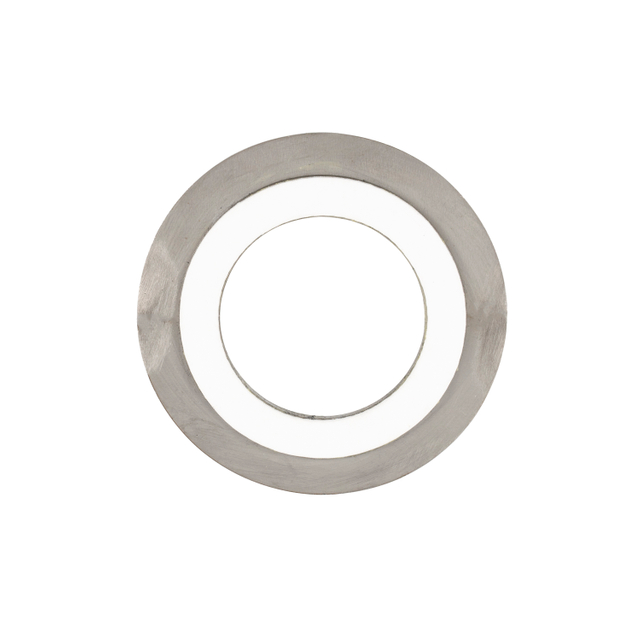
Engineered to seal,
The last line of defense against leakage
+86-13566064802

Views: 0 Author: Site Editor Publish Time: 2026-07-09 Origin: Site
Heat exchanger maintenance presents a harsh operational reality for plant engineers and maintenance crews. Gasket failure inevitably leads to unplanned outages, fugitive emissions, and significant safety hazards on the facility floor. We constantly battle specific sealing challenges in these critical assets. Fluctuating temperatures, radial shear, and varying flange surface conditions complicate the sealing interface. Maintaining adequate bolt load over time adds another layer of difficulty to the process, especially when dealing with older equipment.
Two industry-standard solutions dominate high-pressure, high-temperature heat exchanger applications: Spiral Wound Gaskets (SWG) and Kammprofile Gaskets. Many professionals refer to the latter as Camprofile or Kammpro. Selecting the right seal requires strict evaluation of mechanical and environmental criteria rather than relying on a simple binary choice. You must match the gasket technology directly to your specific operational parameters to ensure long-term joint integrity.
Spiral wound gaskets offer superior elastic recovery, making them highly effective for applications with severe thermal cycling.
Kammprofile gaskets excel in handling flange imperfections and require lower minimum seating stress, making them ideal for older or slightly pitted flanges.
For large-diameter heat exchangers, Kammprofile gaskets provide structural stability, eliminating the buckling and "pop out" risks commonly associated with large spiral wound gaskets.
Heat exchangers operate under intense mechanical stresses that test the limits of any sealing material. Tubular Exchanger Manufacturers Association (TEMA) designs frequently experience severe differential thermal expansion. The shell and tube sheet expand and contract at different rates during operation. This movement creates significant radial shear forces across the sealing face, pulling and pushing the gasket material laterally.
Evaluating a successful seal requires strict baseline criteria. You need high blowout resistance and broad chemical compatibility with the process media. The gasket must maintain a reliable seal under varying bolt loads as the equipment cycles through startup and shutdown phases. It must also tolerate existing flange conditions, which often degrade over years of service due to corrosion, erosion, or previous mechanical damage.
Specifying the wrong gasket carries severe operational consequences. Crushed windings and radial buckling destroy joint integrity immediately. Flange damage from improper seating stress forces expensive, time-consuming field machining repairs. Ultimately, misapplication results in catastrophic media leaks, unacceptable facility downtime, and potential environmental reporting requirements.
To understand the magnitude of these forces, consider the typical operating parameters of a refinery heat exchanger. Temperatures can swing hundreds of degrees in a matter of hours. Pressures can spike during process upsets. The gasket sits at the exact boundary of these extreme forces, acting as the single point of failure between contained process fluids and the outside atmosphere. We must evaluate every mechanical property of the chosen seal against these harsh realities.
Manufacturers construct spiral wound gaskets using alternating layers of material. A V-shaped metal wire winds together with a soft filler material like flexible graphite or PTFE. Inner and outer guide rings play a critical structural role in the overall assembly. These solid metal rings prevent over-compression of the sealing element and center the gasket perfectly within the heat exchanger flange bolt circle.
The primary mechanism of action relies entirely on the V-shaped metal windings. These windings act as a heavy-duty spring when compressed. They provide high recovery rates when you compress them under proper bolt load. This spring-like action maintains the seal as flanges separate slightly during thermal expansion or pressure surges. The filler material conforms to the micro-imperfections of the flange face, while the metal wire provides the mechanical strength to resist blowout.
Spiral wound gaskets perform best in specific, well-controlled scenarios. They require properly machined flanges with good surface finishes to seal effectively. They excel in high thermal cycling environments with moderate pressure differentials where their elastic recovery can be fully utilized. You will frequently find them utilized on standard ASME pipe flanges across industrial facilities, where flange rigidity and bolt load are highly predictable.
However, their performance drops significantly if the flange surface falls outside the recommended roughness specifications. The rigid nature of the metal windings prevents them from flowing into deep pits or heavy scratches. If you apply uneven bolt load during installation, the windings can pinch or crush, destroying the spring mechanism and creating an immediate leak path. Proper installation technique remains absolutely mandatory for SWG success.
Kammprofile Gaskets feature a highly engineered, robust design. They utilize a solid metal core machined with concentric serrations or grooves across the sealing face. A thin layer of soft facing material covers this rigid core. Common facing materials include flexible graphite, PTFE, or high-temperature mica, depending on the chemical and thermal requirements of the process.
The serrated peaks concentrate the applied bolt load into very specific, narrow bands. This focused pressure compresses the soft facing material directly into flange imperfections. The action creates high-density micro-seals across the concentric grooves. The solid metal core prevents the gasket from crushing under extreme pressure, providing a positive stop that protects the integrity of the joint even under massive bolt loads.
These gaskets serve as the optimal choice for demanding, heavy-duty applications. They dominate large-diameter vessel sealing where handling fragility is a major concern. They perform exceptionally well on older flanges suffering from surface damage, pitting, or minor warping. Heat exchanger nozzle and shell joints benefit greatly from their high blowout resistance at low minimum seating stress.
The solid core design also provides exceptional resistance to radial shear. When the heat exchanger shell and tube sheet expand at different rates, the solid metal core of the Kammprofile gasket absorbs the lateral movement without degrading. The soft facing material may shear slightly, but the concentric grooves keep it trapped in place, maintaining the micro-seals and preventing process fluid from escaping.
Spiral wound gaskets demand strict adherence to flange surface finish specifications. They typically require a finish between 125 and 250 microinches RMS. Scratches, tool marks, or pits outside this range create direct leakage paths through the winding interfaces. The rigid nature of the compressed metal windings cannot flow into deep surface anomalies, making them highly sensitive to flange degradation.
Kammprofile technology offers a distinct, measurable advantage here. The soft facing flows into pits, scratches, and minor flange distortions under compression. The metal serrations trap the facing material, preventing it from extruding outward under pressure. This mechanism provides a highly reliable seal even on less-than-ideal flange surfaces that would cause a standard spiral wound gasket to fail immediately.
Surface Condition | Spiral Wound Gaskets (SWG) | Kammprofile Gaskets |
|---|---|---|
Ideal Surface Finish (Ra) | 125 - 250 microinches | 63 - 250 microinches (Highly forgiving) |
Tolerance for Pitting | Low; windings cannot fill deep voids | High; soft facing flows into pits |
Tolerance for Scratches | Poor; radial scratches cause leaks | Excellent; serrations trap facing material |
Flange Warpage Handling | Moderate; relies on spring recovery | High; solid core provides stability |
Thermal cycling tests the recovery capabilities of any seal. SWGs provide excellent spring-like recovery during rapid temperature fluctuations. They track flange movement effectively as the joint expands and contracts. Kammprofile designs act more rigidly in this regard. They rely on the initial high-density micro-seal and the trapped facing material rather than dynamic spring recovery to maintain joint integrity during thermal shifts.
Radial shear resistance presents a completely different mechanical challenge. Differential thermal expansion creates severe radial shear across the flange face. The solid metal core of a Kammprofile resists this lateral movement perfectly. In contrast, SWGs face potential delamination. Extreme radial shear can cause the metal windings to unravel, separate from the guide rings, and fail catastrophically.
Large-diameter spiral wound gaskets are notoriously fragile and difficult to handle. They are highly prone to inward buckling during installation. The windings can "pop out" or separate when subjected to high compressive loads or uneven bolt torque. The physics of large wire loops simply lack the radial rigidity necessary to withstand the installation stresses common in large heat exchanger assembly.
Kammprofile designs maintain absolute structural integrity in large diameters. The solid core prevents distortion and buckling entirely. If you over-compress a Kammprofile, you might see minor graphite extrusion at the edges. This localized behavior does not compromise the core stability or the primary seal. SWG buckling, however, always results in catastrophic joint failure and requires immediate replacement.
Initiating a seal requires a specific minimum seating stress applied through the flange bolts. Kammprofile designs generally require significantly lower seating stress than SWGs. The sharp load concentration on the serrated core peaks achieves a tight seal with less applied force. This characteristic proves invaluable when dealing with degraded, lightly bolted, or glass-lined flanges that cannot withstand massive torque.
Maximum allowable stress dictates how much torque you can safely apply before destroying the gasket. You risk crushing a spiral wound gasket if you apply excessive bolt load without a properly sized compression ring. A solid-core Kammprofile offers exceptional crush resistance. You can apply massive bolt loads without destroying the fundamental structure of the seal, providing a much wider window for installation error.
Both gasket categories align with Tubular Exchanger Manufacturers Association (TEMA) standards. Engineers specify them regularly for critical heat transfer equipment across all industrial sectors. However, multi-pass heat exchangers introduce complex sealing geometries. Sealing pass partition walls requires specific structural considerations to prevent fluid bypass between the different cooling or heating stages.
SWGs utilize welded pass partition ribs to match the internal geometry of the exchanger. These welds are historically prone to fatigue failure and internal leakage under thermal stress. Kammprofile designs feature integral, single-piece machined pass partition bars. This seamless construction eliminates weld vulnerabilities entirely. It guarantees strict fluid separation between heat exchanger passes, improving overall equipment efficiency.
Refineries have witnessed a significant evolution in heat exchanger sealing practices. Hydroprocessing and catalytic cracking units push equipment to extreme temperature and pressure limits. High-temperature and high-pressure cycling historically led to dangerous SWG blowouts in these units. This failure rate drove a massive industry shift toward robust Kammprofile designs for critical refinery assets.
Nuclear installations and power generation facilities demand absolute reliability from every flanged joint. Engineers specify Kammprofile technology in primary nuclear circuits where radiation and pressure create extreme environments. High-pressure steam lines in power plants also rely heavily on them. They deliver low-emissions performance and unmatched blowout resistance under extreme systemic pressures, ensuring plant safety and regulatory compliance.
Large SWGs exhibit extreme fragility before they ever reach the flange face. Improper horizontal carrying causes the inner and outer rings to detach from the winding element. The metal windings can easily unwind if technicians mishandle them or bump them against scaffolding. You must store and transport them flat on rigid support boards to maintain their structural integrity.
Kammprofile designs possess a rugged, indestructible core but a highly vulnerable exterior. You must protect the thin, soft graphite or PTFE facing at all costs. Scratches, gouges, or physical contamination prior to installation compromise the micro-seal capability. Keep them in their protective packaging until the exact moment of flange assembly to prevent accidental damage.
Proper torque procedures dictate the success of any gasket installation, regardless of the technology chosen. You must use calibrated torque wrenches or hydraulic tensioners. Apply proper thread lubrication to all studs and nuts to ensure accurate load transfer. Execute a strict star-pattern tightening sequence. Incremental torque application prevents flange distortion and uneven gasket compression.
Inspect the flange faces for deep pits, scratches, or residual gasket material.
Verify the gasket dimensions match the flange and the pass partition layout exactly.
Lubricate all studs, nuts, and washers with an approved anti-seize compound.
Install the gasket carefully, ensuring it is perfectly centered within the bolt circle.
Tighten all bolts hand-tight, then proceed with a minimum of three cross-pattern torque passes.
Centering presents unique challenges during assembly, especially on vertical flanges. You must properly center the gasket within the bolt circle to ensure uniform load distribution across the heat exchanger sealing surface. Kammprofiles often utilize a loose-fitting centering ring to assist technicians during vertical flange installations, preventing the gasket from dropping out of alignment before the bolts are tightened.
Specify Spiral Wound Gaskets for standard ASME pipe flanges and pristine flange surfaces where extreme thermal cycling demands high elastic recovery.
Select Kammprofile Gaskets for large-diameter heat exchangers, older flanges with surface imperfections, and applications requiring low seating stress.
Consult with a specialized sealing engineer to review your specific TEMA heat exchanger specifications and operating parameters.
Conduct a thorough flange surface finish assessment using a surface comparator before finalizing your procurement decisions.
Implement strict, documented torque procedures using calibrated equipment for every heat exchanger assembly.
As a leading global manufacturer of high-performance industrial sealing solutions, Dongheng specializes in producing top-tier Spiral Wound Gaskets and Kammprofile Gaskets that comply with rigorous international engineering standards. With decades of deep technical expertise, the company delivers custom-engineered sealing configurations designed to optimize heat exchanger reliability, withstand extreme radial shear, and eliminate fugitive emissions across demanding process environments worldwide.
A: Yes, they can often replace SWGs directly. You must verify the compressed thickness compatibility. Ensure your current bolt load calculations align with the new gasket requirements. Check the flange gap to confirm the piping system can accommodate any minor dimensional differences without inducing pipe strain.
A: Large SWGs lack radial rigidity. The wire windings act like a large, flexible hoop. When subjected to high compressive loads or uneven bolt torque during installation, the internal forces push the windings inward. This causes the gasket to buckle and pop out of its intended position.
A: The solid metal core is often reusable if it remains undamaged and unwarped after service. However, you must completely remove and replace the soft facing material before reinstalling the core. Never reuse a gasket without proper inspection and professional refacing.
A: Flexible graphite serves as the standard for general high-temperature applications. PTFE provides superior chemical resistance for highly corrosive media at lower temperatures. High-temperature mica is required for extreme heat environments where graphite would oxidize and degrade.
A: Engineers use ASME Boiler and Pressure Vessel Code (BPVC) Appendix 2 calculations. You must apply the specific 'm' (maintenance factor) and 'y' (minimum seating stress) factors provided by the gasket manufacturer to determine the exact torque requirements for your specific joint.
A: They are highly forgiving but perform best on finishes between 63 and 250 microinches Ra. Unlike SWGs, their soft facing material can flow into minor pits and scratches, allowing them to seal effectively on degraded surfaces that would cause an SWG to leak.