
Engineered to seal,
The last line of defense against leakage
+86-13566064802

Views: 0 Author: Site Editor Publish Time: 2026-03-05 Origin: Site
Oil valve leaks under high pressure can lead to costly downtime and safety risks. But what if a simple gasket could prevent these issues? Spiral Wound Gaskets are designed to provide robust sealing in high-pressure valve systems. In this article, we’ll explore how Spiral Wound Gaskets maintain seal integrity, even under extreme conditions. You’ll learn how their design effectively addresses common challenges like pressure fluctuations, thermal expansion, and flange misalignment.
A Spiral Wound Gasket is a semi-metallic sealing solution, specifically designed to handle extreme pressure and temperature fluctuations. It’s constructed by winding alternating layers of metal windings and soft filler materials like graphite or PTFE. This unique design ensures flexibility and resilience, allowing the gasket to withstand demanding conditions like pressure cycling, temperature changes, and exposure to various chemicals.
The core components of a spiral wound gasket include:
● Outer Ring: Typically made of carbon steel, this ring helps to center the gasket within the flange, ensuring proper alignment during installation.
● Inner Ring: This component prevents inward buckling of the windings, protecting the sealing element from the effects of high pressure.
● Sealing Element: A critical part, it includes the windings and the filler material, which create the actual seal by conforming to the flange surface, filling any imperfections, and preventing leaks.
Key features of spiral wound gaskets include their compressibility, elasticity, and recovery properties, which make them ideal for environments where thermal expansion or flange misalignment occurs. Additionally, XS Seal offers a range of customizable spiral wound gaskets that are tailored to specific operating conditions. This includes adjusting the materials and thickness to suit unique needs such as pressure class, media compatibility, and temperature ranges.
The materials used in the construction of Spiral Wound Gaskets play a crucial role in determining their performance under high-pressure conditions. Let’s break down the common materials used in both the metal windings and the filler elements:
Material Type | Common Materials | Applications |
Metal Windings | Stainless Steel (304, 316), Monel, Inconel, Hastelloy | Suitable for high pressure, high temperature, and chemical resistance |
Filler Materials | Graphite, PTFE, Ceramic, Mica | Provides additional resistance to thermal expansion, chemical attack, and high temperatures |
● Metal Windings: The most commonly used metals are stainless steel and Monel, which offer a balance of strength and corrosion resistance. Inconel and Hastelloy are used for even more extreme conditions, such as in chemical processing or high-temperature systems.
● Filler Materials: Graphite is widely used in oil and gas industries due to its high-temperature tolerance, while PTFE is chosen for its chemical inertness. Other fillers like mica and ceramic are used in applications requiring resistance to oxidative environments.
At XS Seal, customization options are available for both the metal and filler materials, ensuring each gasket is crafted to meet the specific needs of the application. Whether it’s a matter of pressure class, temperature requirements, or chemical compatibility, XS Seal delivers tailored sealing solutions for every industrial challenge.
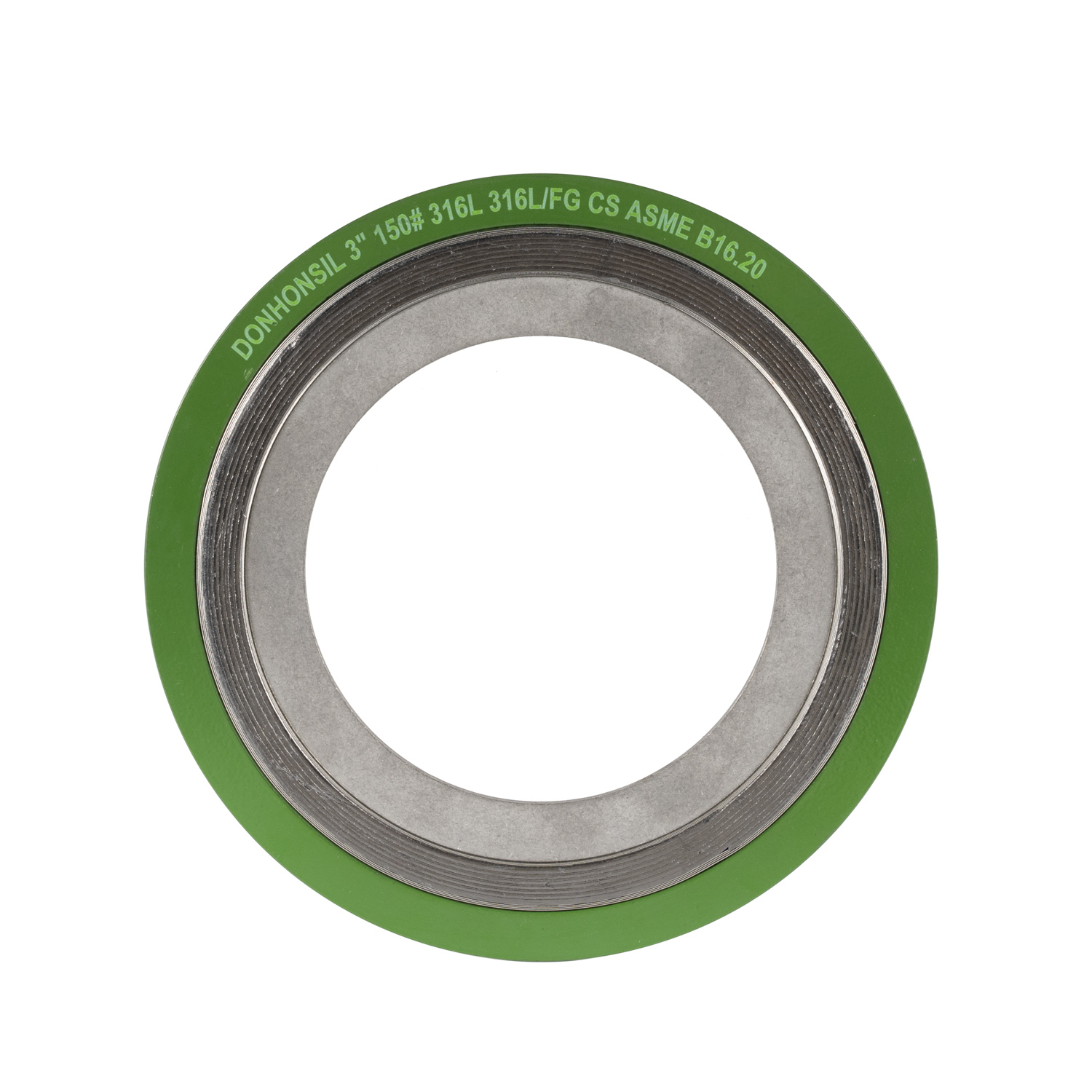
Spiral Wound Gaskets (SWGs) are specially designed to thrive in extreme conditions, making them a perfect choice for valve applications under high pressure and temperature. Their semi-metallic construction, with metal windings and filler materials, allows them to handle pressures up to 250 bar and temperatures ranging from -200°C to +1000°C.
The ability of SWGs to adapt to fluctuating pressure and temperature conditions in oil valve systems is crucial, especially in industries like oil & gas. These systems are prone to frequent shifts in operational conditions, and a reliable sealing solution is necessary to prevent leaks and ensure safe, continuous operation.
● Pressure Resistance: SWGs can withstand extreme pressure, providing a secure seal even under intense operational conditions.
● Temperature Resistance: The materials used allow SWGs to maintain performance across a wide range of temperatures, from cryogenic conditions to extremely high heat.
● Flexibility & Recovery: The spiral design allows the gasket to compress and recover under pressure, adapting to thermal expansion and preventing leaks.
The spiral construction of Spiral Wound Gaskets plays a key role in maintaining seal integrity and preventing leaks. The alternating layers of metal windings and filler materials create a tight seal that conforms to the flange surface, compensating for imperfections and ensuring a leak-free environment in high-pressure systems.
In addition to the design, inner and outer rings are critical components that enhance the performance of the gasket:
● Inner Ring: Prevents inward buckling of the gasket, protecting it from damage under high pressure. This ensures that the sealing element remains intact and fully functional.
● Outer Ring: Serves as a compression limiter, ensuring that the gasket maintains its structure and doesn’t collapse under high bolt load, which is common in oil valve applications.
Together, these components ensure that Spiral Wound Gaskets provide consistent sealing performance, even in challenging conditions, such as fluctuating pressures and thermal cycling.
Component | Function |
Inner Ring | Prevents inward buckling and protects the sealing element |
Outer Ring | Acts as a compression limiter, ensuring proper alignment |
Spiral Windings | Provides flexibility, compression, and recovery under pressure |
Filler Material | Enhances sealing by filling flange imperfections and resisting high temperatures |
The design of Spiral Wound Gaskets is built for flexibility and resilience, which makes them ideal for high-pressure valve applications. The spring-like action of the spiral structure allows the gasket to compress and recover under bolt load, maintaining seal integrity even under fluctuating pressures. This compressibility ensures the gasket adapts to flange misalignment and compensates for thermal expansion, effectively preventing oil valve leaks.
The alternating layers of metal windings and filler materials create a dynamic seal that can flex and adjust to changes in pressure and temperature. When the pressure inside the valve system increases, the gasket compresses to create a tight seal. As the pressure decreases, the gasket recovers, ensuring that the seal remains intact even as the system cools or experiences varying loads.
● Compression & Recovery: Helps absorb pressure surges and maintain a consistent seal.
● Flange Misalignment: SWGs adapt to imperfections and misalignments, which is a common issue in oil valve applications.
● Thermal Expansion: The gasket can adjust to changes in size due to temperature fluctuations.
XS Seal’s high-performance spiral wound gaskets are engineered for reliable sealing in these challenging conditions, offering solutions that perform under extreme pressures and temperatures.
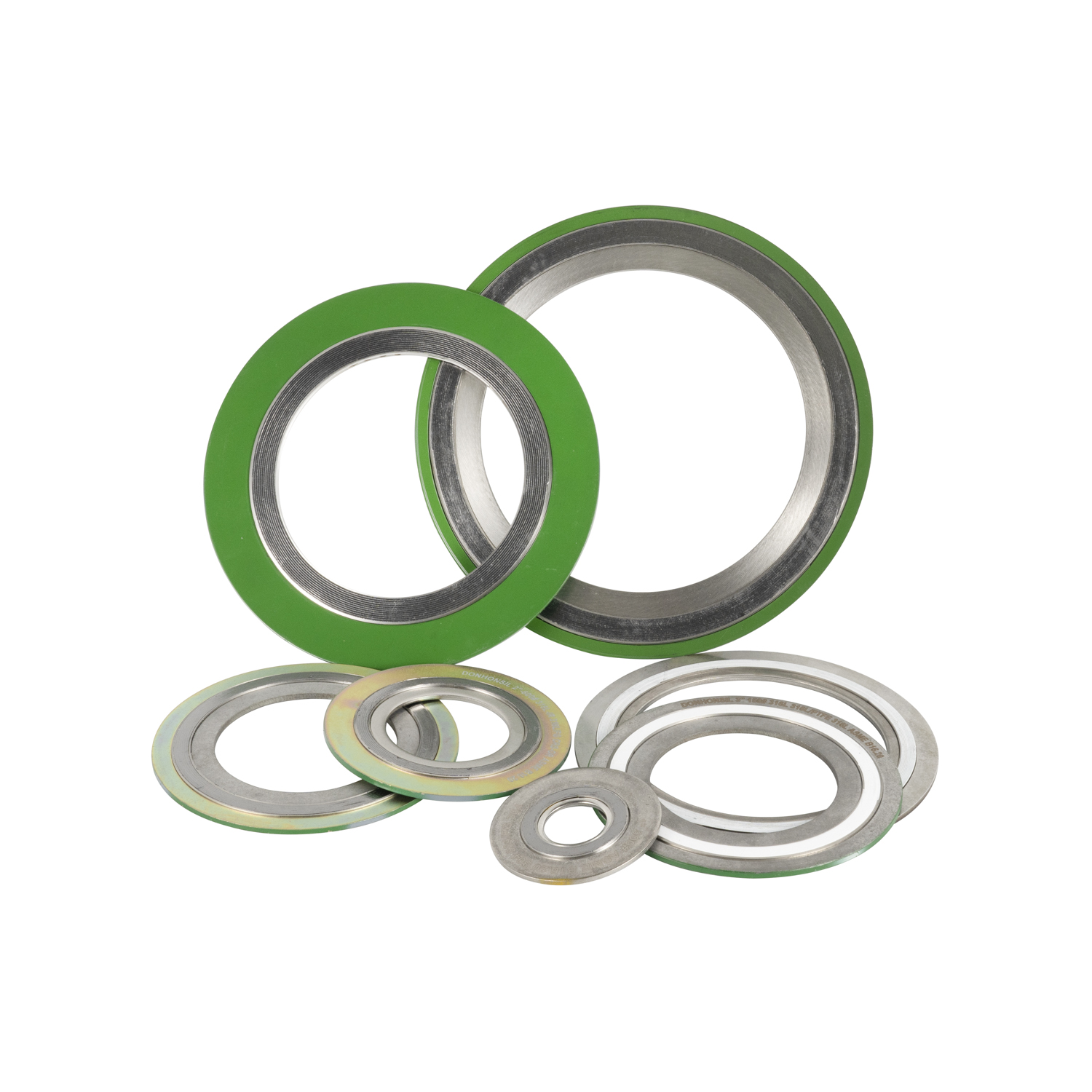
In high-pressure systems, like oil valve applications, inner and outer rings play a crucial role in ensuring the seal’s effectiveness and preventing damage to the gasket. The inner ring prevents the gasket from buckling inward under pressure, which would cause leaks and potentially damage the sealing element. It acts as a reinforcement, holding the windings in place even under high pressure.
The outer ring provides additional compression support. It ensures that the gasket stays in place and doesn’t get displaced during tightening, even under extreme loads. It also aids in proper gasket alignment within the valve system, making installation easier and more reliable.
Ring Type | Function |
Inner Ring | Prevents inward buckling and protects the sealing element |
Outer Ring | Provides compression support and ensures proper alignment |
Together, these rings support the spiral wound gasket’s performance, allowing it to withstand high-pressure environments like those found in oil valve systems without compromising its sealing capabilities.
The choice of filler material is crucial in determining how well a Spiral Wound Gasket can handle high-pressure and high-temperature applications. Common fillers like flexible graphite and PTFE enhance the gasket’s ability to withstand thermal expansion, cyclic loading, and chemical exposure—conditions often encountered in oil valve systems.
● Flexible Graphite: Popular for its high temperature resistance and ability to conform to flange imperfections. It is ideal for extreme heat and ensures the gasket remains effective even in challenging conditions.
● PTFE: Chemically inert and resistant to corrosion, PTFE fillers are useful in applications involving harsh chemicals and high temperatures.
The graphite filler, in particular, allows the Spiral Wound Gasket to fill flange imperfections, ensuring a tight seal even when there are minor surface irregularities. This makes SWGs a great choice for oil valve applications, where precision and reliability are paramount.
Filler Material | Properties |
Graphite | High temperature resistance and excellent flexibility |
PTFE | Chemically inert and resistant to corrosion |
In oil valve systems, high bolt loads and pressure surges can put significant stress on gaskets, causing them to fail if not properly designed. Spiral Wound Gaskets (SWGs) are specifically engineered to maintain sealing performance even under these harsh conditions. The spring-like action of the spiral winding allows the gasket to compress and recover under bolt load, ensuring that it can withstand high pressure and thermal cycling without compromising the seal.
● Sealing Performance: SWGs maintain their integrity even under fluctuating bolt loads and pressure surges that are common in industrial applications.
● Accurate Compression: For effective sealing, uniform compression is essential. XS Seal ensures that their gaskets provide accurate and consistent compression, enhancing the sealing ability and preventing leaks in demanding applications.
With the proper installation and compression, Spiral Wound Gaskets offer reliable, long-lasting seals that ensure the safety and efficiency of oil valve systems under high-pressure conditions.
Flange misalignment is a common issue in valve systems that can negatively impact sealing integrity. Even a slight misalignment can cause uneven compression of the gasket, resulting in leaks.
Spiral Wound Gaskets are designed to accommodate such imperfections, providing a flexible and adaptable solution. The spiral design allows the gasket to conform to minor flange misalignments without losing its sealing effectiveness.
● Impact of Flange Misalignment: Misalignment can lead to uneven gasket compression and leaks, but SWGs’ flexibility helps maintain an effective seal.
● Customization: XS Seal offers custom gasket solutions, specifically designed to offer enhanced flexibility for irregular or misaligned flange faces, ensuring a proper seal even in challenging conditions.
Whether the flange faces are slightly misaligned or subject to thermal expansion, XS Seal’s customized Spiral Wound Gaskets help to ensure that the seal remains intact, preventing costly downtime and unsafe conditions.
One of the most common gasket failures in high-pressure applications is the formation of a bird’s nest, which occurs when the metal windings of the gasket buckle and fall into the pipe. This can cause damage to rotating equipment like pumps or valves.
Spiral Wound Gaskets are specifically designed to prevent this by incorporating inner rings that provide additional support, preventing inward buckling.
● Bird’s Nest Failures: When the metal windings collapse inside the pipe, it creates a bird’s nest, which disrupts the system. The inner rings of SWGs prevent this by reinforcing the gasket structure.
● Outer Rings: The outer rings of Spiral Wound Gaskets provide compression support and help to minimize the risk of damage from high-pressure conditions. This additional support ensures that the gasket stays in place, even during extreme fluctuations in pressure.
Component | Function |
Inner Ring | Prevents inward buckling and protects the gasket from damage |
Outer Ring | Provides compression support and ensures proper gasket alignment |
Spiral Windings | Allows for flexibility and compression under pressure |
Spiral Wound Gaskets are crucial for maintaining leak-proof seals in high-pressure valve systems, especially in oil applications. DONHONSIL provides high-performance Spiral Wound Gaskets that are tailored to meet the specific needs of demanding industries, offering durable, customizable, and reliable sealing solutions for high-pressure applications.
A: A Spiral Wound Gasket is a semi-metallic gasket made by winding alternating layers of metal strips and soft fillers to form a flexible yet resilient sealing solution for high-pressure applications.
A: Spiral Wound Gaskets maintain seal integrity under fluctuating pressures by compressing and recovering. They compensate for flange misalignment, preventing oil valve leaks in high-pressure environments.
A: Spiral Wound Gaskets typically use metal materials like stainless steel and fillers such as graphite or PTFE to resist high temperatures and pressure, ensuring durability and effective sealing.
A: Inner rings prevent inward buckling under high pressure, while outer rings provide compression support and ensure the gasket stays aligned within the valve, enhancing the sealing performance.
A: DONHONSIL tailors Spiral Wound Gaskets to meet specific pressure classes, temperature ranges, and media compatibility, providing durable and reliable sealing solutions for various industrial applications.


