
Engineered to seal,
The last line of defense against leakage
+86-13566064802

Views: 0 Author: Site Editor Publish Time: 2026-01-05 Origin: Site
Industrial gaskets play a vital role in keeping fluids and gases safely contained in high-pressure systems. The right gasket can prevent leaks, reduce downtime, and improve system safety.
In this article, we will explore how to choose the ideal gasket—Spiral Wound, RTJ, or Kammprofile—based on your specific application needs. You’ll learn about the key differences, advantages, and when to use each gasket type to ensure optimal performance.
An industrial gasket is a sealing component used between two mating surfaces to prevent leakage of fluids or gases. Gaskets are essential in systems exposed to high temperatures, pressures, or aggressive chemicals. They work by filling the microscopic gaps between surfaces, creating a reliable barrier that withstands mechanical forces, temperature changes, and chemical exposure.
Industrial gaskets are used across various sectors, including oil & gas, chemical processing, power generation, pharmaceuticals, and food production. They play an essential role in preventing leaks in pipelines, reactors, heat exchangers, valves, and other critical machinery. Each gasket type has been designed to handle specific pressure, temperature, and chemical conditions.
Spiral wound gaskets are made by winding alternating layers of metal and soft filler materials, such as graphite or PTFE, in a spiral pattern. The metal strips provide strength and resilience, while the filler material ensures sealing performance, especially under high pressure and fluctuating temperatures. These gaskets are often equipped with inner and outer rings for added centering and compression control.
Spiral wound gaskets are known for their excellent resilience, high sealing capabilities, and flexibility. They perform well under pressure fluctuations and high temperatures. The metal winding offers durability, while the filler material allows the gasket to conform to flange irregularities, providing a secure seal even in imperfect conditions.
Spiral wound gaskets are ideal for high-pressure and high-temperature environments such as power plants, chemical reactors, and oil & gas pipelines. Their flexibility allows them to maintain a reliable seal despite thermal expansion, flange movement, and pressure changes. They are widely used in industries where maintaining a tight seal is crucial to operations.
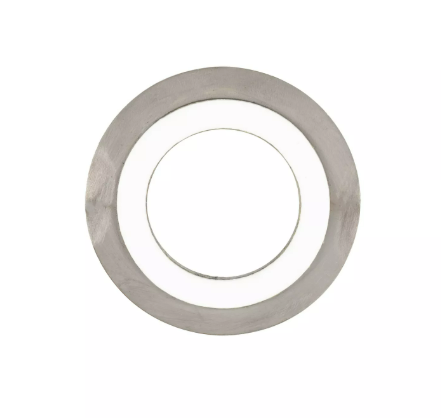
RTJ gaskets are solid metal rings designed to fit into grooves on flanges. These gaskets rely on metal deformation, or "coining," to create a seal under high pressure. There are several types of RTJ gaskets, including oval and octagonal designs, with each type offering unique sealing performance under different conditions.
RTJ gaskets are highly durable and reliable, particularly in extreme high-pressure applications. Their design allows them to withstand intense stress and high temperatures. The self-energizing effect, created by internal pressure, ensures a tight seal, making RTJ gaskets ideal for industries dealing with hazardous substances or requiring zero-leakage performance.
RTJ gaskets are commonly used in oil & gas pipelines, offshore platforms, and high-pressure steam systems. They are suited for situations where the gasket needs to provide an extremely tight seal and handle high pressures, such as in deepwater oil drilling or high-pressure chemical reactors.
Kammprofile gaskets consist of a metal core with serrated grooves and a soft sealing layer, typically made of graphite or PTFE. This combination allows Kammprofile gaskets to maintain a reliable seal under high pressure while being resistant to blowout and providing excellent load distribution. The soft sealing layer fills the microscopic imperfections of the flange, ensuring a tight seal.
Kammprofile gaskets are known for their exceptional resistance to high pressure and vibration. The grooved metal core provides structural support, while the soft sealing layer ensures effective sealing performance. These gaskets are durable, and their unique construction makes them ideal for critical applications that require superior load distribution and stability.
Kammprofile gaskets are commonly used in heat exchangers, high-pressure process lines, and reactors. They are particularly effective in environments with constant pressure fluctuations or vibrations, as the gasket’s structure can absorb and withstand these stresses. Their strong sealing capabilities make them ideal for applications that demand long-term reliability.
Each gasket type offers varying levels of chemical and pressure resistance. Spiral wound gaskets, for example, are highly effective in applications involving pressure fluctuations and moderate chemical exposure. RTJ gaskets, on the other hand, provide superior sealing for extremely high-pressure systems but may not be as versatile in handling varying chemicals. Kammprofile gaskets excel in high-pressure environments and offer exceptional sealing under continuous stress, but they are often used in more stable, non-corrosive environments.
Spiral wound gaskets are capable of withstanding high temperatures, making them ideal for steam lines and reactors. RTJ gaskets can handle very high temperatures, especially in the oil & gas industry, where temperature extremes are common. Kammprofile gaskets also provide high temperature resistance, but their superior performance lies in their ability to manage mechanical stress and maintain sealing integrity under high load conditions.
While Spiral Wound gaskets are known for their flexibility, which allows them to adjust to slight flange misalignments, RTJ gaskets offer a more rigid seal. Kammprofile gaskets are less flexible but excel in ensuring stability under high loads, making them ideal for sealing critical applications where performance must remain consistent even under high pressure.
Gasket Type | Pressure Resistance | Temperature Resistance | Flexibility | Ideal Applications |
Spiral Wound | High | High | High | Pipelines, reactors, heat exchangers |
RTJ | Very High | Very High | Low | High-pressure systems, oil & gas, power generation |
Kammprofile | High | High | Moderate | Critical process lines, high-vibration systems |
When choosing the right gasket for a specific application, it's essential to consider factors like operating pressure, temperature, and the nature of the fluid or gas being sealed. For high-pressure applications, RTJ gaskets are a reliable choice. For dynamic loads and thermal cycling, Spiral Wound gaskets are ideal. For critical, high-load situations where stability is crucial, Kammprofile gaskets are the best option.
Cost is often a factor in gasket selection, and Spiral Wound gaskets tend to be more cost-effective for general applications compared to Kammprofile or RTJ gaskets. However, the performance and durability of RTJ and Kammprofile gaskets in extreme conditions may justify their higher cost for applications where performance and safety are paramount.
Gaskets require periodic inspection and replacement to ensure continued functionality. Spiral Wound gaskets, due to their flexibility, tend to last longer in fluctuating pressure systems. RTJ and Kammprofile gaskets, while durable, may require more frequent checks to ensure they remain intact, especially in extreme environments.
Choosing the right gasket is crucial for ensuring optimal performance in industrial systems. Spiral Wound, RTJ, and Kammprofile gaskets offer distinct advantages depending on application needs such as pressure, temperature, and chemical exposure. Selecting the right gasket can prevent costly leaks, reduce downtime, and maintain equipment integrity. For tailored solutions, Ningbo Dongheng sealing Co.,ltd offers high-quality gaskets designed to meet the toughest sealing demands in various industries.
A: An Industrial Gasket is a sealing component used to prevent leaks between two surfaces in various industrial applications. It ensures a tight seal by filling gaps between flanges or other joining surfaces.
A: Choose an Industrial Gasket based on factors like pressure, temperature, chemical exposure, and flange conditions. Spiral Wound, RTJ, and Kammprofile gaskets are ideal for different sealing requirements.
A: Spiral Wound Industrial Gaskets provide excellent flexibility and are suitable for high-pressure and high-temperature environments. Their metal winding and filler material allow for superior sealing capabilities.
A: RTJ Industrial Gaskets are ideal for extremely high-pressure applications, such as in oil & gas and power generation industries. They offer a robust seal in demanding environments.
A: Spiral Wound Industrial Gaskets offer flexibility and recovery, making them suitable for fluctuating pressures and temperatures, while Kammprofile Industrial Gaskets provide strong resistance to pressure and vibration, ideal for critical process lines.


