


Views: 0 Author: Site Editor Publish Time: 2026-01-05 Origin: Site


Gaskets are essential for preventing leaks and ensuring system efficiency. But how do you choose the right material for the job? Rubber Gaskets and PTFE Gaskets offer distinct advantages depending on the environment.
In this article, we’ll dive into the key differences between Rubber and PTFE gaskets. You’ll learn about their material properties, ideal applications, and cost considerations to make an informed decision.
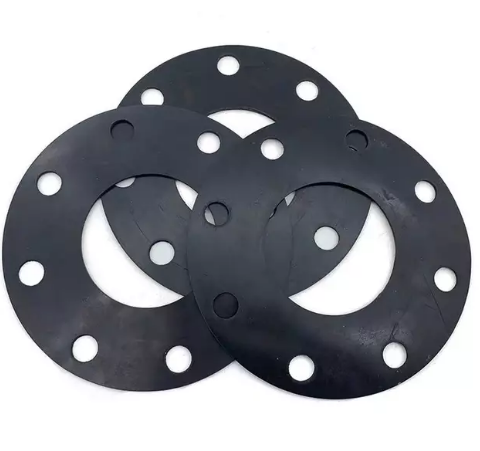
Rubber gaskets are made from various elastomeric materials that offer flexibility and resilience. The most common types include Nitrile Rubber (NBR), EPDM (Ethylene Propylene Diene Monomer), Silicone Rubber, and Viton. Each type of rubber offers distinct properties, making them suitable for specific applications. For example, Nitrile Rubber is ideal for oil resistance, EPDM is commonly used for water-based applications, and Silicone Rubber excels in high-temperature environments.
Rubber gaskets are known for their elasticity and ability to compress under pressure, forming a tight seal between surfaces. They provide excellent sealing capabilities in low- to medium-pressure systems. Their ability to resist a wide range of temperatures is another key feature, although they typically perform better in moderate heat conditions rather than extreme temperatures. Rubber gaskets also provide good chemical resistance, although their performance can vary depending on the type of rubber used.
Rubber gaskets are used in various applications where flexibility, cost-effectiveness, and ease of installation are priorities. These gaskets are commonly found in plumbing, automotive systems, HVAC, and water pipelines. They are particularly effective in sealing joints in systems that experience moderate pressure and temperatures. Rubber’s flexibility allows it to fill gaps in imperfect surfaces, making it an ideal choice for many industrial and residential applications.
Polytetrafluoroethylene (PTFE) is a synthetic fluoropolymer, commonly known for its brand name Teflon. PTFE is non-reactive, which makes it an excellent choice for environments with aggressive chemicals and extreme conditions. PTFE gaskets are created by manufacturing this polymer into sheets or shapes suitable for sealing purposes. Due to its chemical resistance, PTFE is often used in critical applications across various industries.
PTFE gaskets stand out due to their superior chemical resistance. They can withstand exposure to most acids, alkalis, and solvents without degrading. Additionally, PTFE has an impressive temperature resistance, capable of enduring extreme heat and cold, ranging from -200°C to +260°C. PTFE gaskets also feature low friction and a non-stick surface, which reduces wear and tear, making them easier to install and maintain.
Due to their exceptional chemical and temperature resistance, PTFE gaskets are commonly used in industries such as chemical processing, pharmaceuticals, food and beverage, and oil and gas. They are ideal for sealing joints in systems exposed to harsh chemicals or fluctuating temperatures, such as reactors, pumps, valves, and pipelines. PTFE gaskets are also frequently used in food-grade applications because they do not react with food products and are easy to clean.
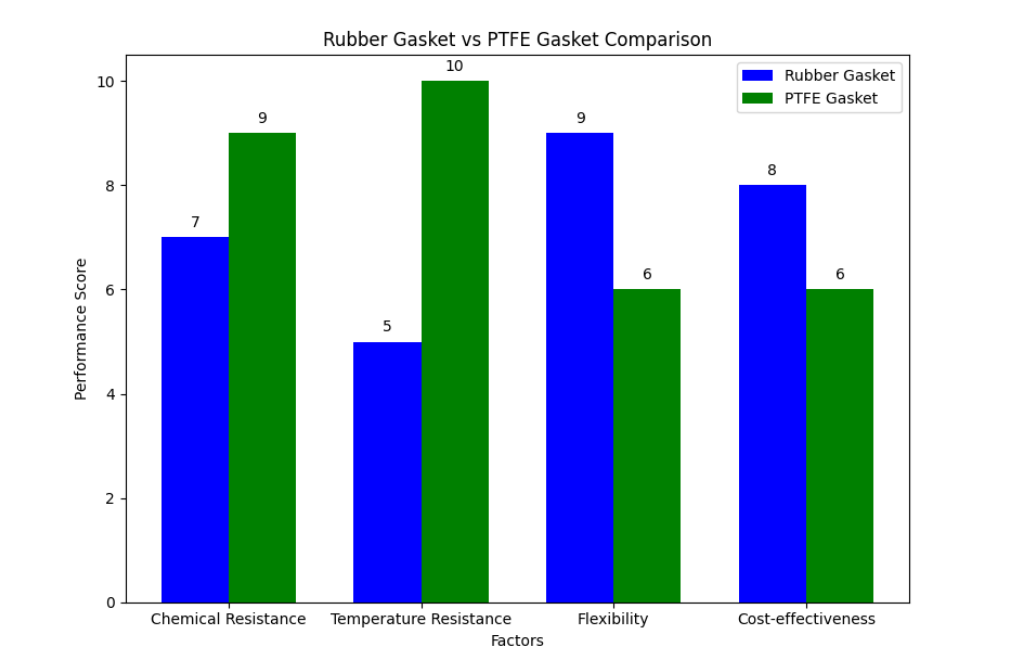
One of the most notable differences between Rubber and PTFE gaskets is their chemical resistance. PTFE gaskets offer outstanding resistance to a wide range of chemicals, including acids, solvents, and bases. This makes PTFE gaskets highly effective in industries that involve aggressive chemical exposure, such as chemical processing and pharmaceuticals. In contrast, Rubber gaskets’ chemical resistance varies depending on the type of rubber. For example, Nitrile Rubber is oil-resistant, while EPDM is more suitable for water and steam applications.
PTFE gaskets excel in environments with extreme temperatures. They can withstand temperatures ranging from -200°C to +260°C, making them ideal for high-temperature industrial applications. Rubber gaskets, on the other hand, are better suited for moderate temperatures. For example, Silicone Rubber can endure temperatures up to 300°C, while Nitrile Rubber is typically effective up to 120°C. This makes PTFE the better option for systems with high thermal demands, such as boilers and furnaces.
Both PTFE and Rubber gaskets are durable, but their longevity depends on the application. PTFE gaskets have a longer lifespan in harsh environments due to their high resistance to chemicals, extreme temperatures, and wear. They are typically low-maintenance and require fewer replacements. Rubber gaskets, while durable in many cases, may degrade faster in aggressive environments, especially when exposed to high temperatures or chemicals. The lifespan of Rubber gaskets is often shorter, and they may need to be replaced more frequently under demanding conditions.
Rubber gaskets are known for their excellent flexibility and elasticity. They can easily conform to irregular surfaces and maintain a tight seal under varying pressure. This makes Rubber gaskets ideal for applications where the sealing surfaces are not perfectly smooth or aligned. PTFE gaskets, while rigid and less flexible, are still effective in sealing applications that do not require significant compression or deformation. However, the lack of flexibility may make PTFE less suitable for dynamic sealing applications where flexibility is required.
Property |
Rubber Gasket |
PTFE Gasket |
Chemical Resistance |
Varies by type (e.g., Nitrile for oils, EPDM for water) |
Excellent, resistant to most acids, bases, solvents |
Temperature Resistance |
Moderate (e.g., 120°C for Nitrile, 150°C for EPDM) |
Very high (up to 260°C) |
Flexibility |
High flexibility, suitable for imperfect surfaces |
Low flexibility, ideal for stable surfaces |
Cost |
Lower cost, economical choice |
Higher cost due to superior material properties |
Durability |
Moderate (subject to degradation in harsh conditions) |
High durability, long lifespan in extreme conditions |
PTFE gaskets offer unparalleled chemical resistance, making them the material of choice for sealing in corrosive environments. They are particularly well-suited for applications that involve harsh chemicals, such as acids, alkalis, and solvents. Their non-reactive nature ensures that they maintain their integrity even when exposed to aggressive substances, providing long-term sealing performance in chemical processing and pharmaceutical applications.
PTFE gaskets can withstand extreme temperatures, from cryogenic conditions to high-heat environments, without losing their sealing properties. This wide temperature range makes them suitable for applications in industries like oil and gas, where temperature fluctuations are common. In contrast, Rubber gaskets have more limited temperature tolerance and may fail in extreme heat or cold.
The low friction and non-stick properties of PTFE gaskets make them easier to install and remove. Their smooth surface prevents them from adhering to sealing surfaces, which reduces the risk of damage during maintenance or replacement. This is particularly beneficial in industries where regular maintenance is necessary, such as food processing or pharmaceutical manufacturing.
Rubber gaskets are generally more affordable than PTFE gaskets, making them a cost-effective option for many applications. Their lower initial cost makes them particularly attractive for applications where sealing performance is required at a lower budget. While PTFE gaskets offer superior performance in extreme conditions, Rubber gaskets can provide adequate sealing for less demanding environments at a fraction of the cost.
Rubber gaskets are highly flexible, making them ideal for sealing surfaces with irregularities or gaps. This flexibility allows them to form a tight seal under low to medium pressure conditions. Rubber gaskets are also easier to install due to their pliability, and they do not require as much precision during installation as PTFE gaskets.
Rubber gaskets perform exceptionally well in low-pressure and moderate-temperature environments. They are commonly used in HVAC systems, plumbing, and automotive applications, where high chemical resistance and extreme temperature tolerance are not necessary. In these scenarios, Rubber gaskets provide reliable sealing performance and long-term durability.
Rubber gaskets are best suited for applications that do not involve extreme temperatures or harsh chemicals. They are ideal for sealing joints in plumbing systems, HVAC systems, and low-pressure pipelines. Their flexibility and cost-effectiveness make them a practical choice for everyday applications in industries like automotive and manufacturing.
PTFE gaskets are the preferred choice for industries that involve chemical processing, food and beverage production, and high-temperature systems. Their superior chemical resistance and temperature tolerance make them ideal for sealing in environments where conventional materials like rubber would fail. PTFE gaskets are also commonly used in applications where contamination must be avoided, such as in pharmaceutical and food processing equipment.
Application Type |
Rubber Gasket |
PTFE Gasket |
Low-Pressure Systems |
Ideal for sealing pipes, HVAC systems, engines |
Not recommended for low-pressure systems |
Chemical Processing |
Suitable for mild chemicals and low pressures |
Best for aggressive chemicals and high pressures |
Food & Pharmaceutical |
Common for non-critical systems |
Used for high purity, non-contaminating environments |
Automotive |
Widely used in automotive seals, engine parts |
Not typically used in automotive applications |
High-Temperature Systems |
Limited use for temperatures above 150°C |
Excellent for systems operating above 150°C |
Rubber gaskets are generally more affordable than PTFE gaskets. This cost difference makes Rubber gaskets the better option for low-budget applications where extreme performance is not required. PTFE gaskets, while more expensive, offer superior sealing capabilities and are the best choice for demanding environments.
While Rubber gaskets have a lower initial cost, their higher maintenance and replacement frequency can add to the overall cost. PTFE gaskets, due to their durability and resistance to harsh conditions, tend to require fewer replacements, resulting in lower long-term maintenance costs.
In summary, the choice between Rubber and PTFE gaskets depends on the specific requirements of your application. PTFE gaskets are ideal for extreme environments due to their superior chemical and temperature resistance. On the other hand, Rubber gaskets offer a cost-effective solution for less demanding applications. Understanding the properties of each material ensures the best sealing solution for your needs. Ningbo Dongheng Sealing Co., Ltd. offers high-quality gaskets tailored to your specific requirements, ensuring reliable and durable performance.
A: A Rubber Gasket is a sealing component made from various types of rubber materials, offering flexibility and cost-effectiveness for sealing in low to medium-pressure applications.
A: Choose a Rubber Gasket for lower temperature, pressure, and chemical resistance needs. It’s ideal for budget-conscious projects where flexibility and ease of installation are key.
A: PTFE gaskets excel in chemical resistance and high-temperature tolerance, making them suitable for harsh environments. Rubber gaskets are more cost-effective but less durable in extreme conditions.
A: Rubber Gaskets are suitable for low to medium pressure applications. For high-pressure needs, PTFE gaskets provide superior sealing performance.
A: Rubber Gaskets offer varying degrees of chemical resistance depending on the material type, but PTFE gaskets generally provide better resistance in aggressive environments.


