
Engineered to seal,
The last line of defense against leakage
+86-13566064802

Views: 0 Author: Site Editor Publish Time: 2026-04-16 Origin: Site
Proper sealing is essential for the reliable and safe operation of machinery and industrial systems. Gaskets and seals, though often confused, serve distinct purposes: gaskets are ideal for static connections, filling gaps between stationary surfaces, while seals are designed to handle motion, preventing leaks in dynamic applications. Choosing the correct material, ensuring precise installation, and performing regular maintenance are critical to avoid fluid leaks, pressure loss, and equipment downtime. For high-quality gaskets, durable seals, and expert advice tailored to your industrial needs, DONHONSIL provides comprehensive sealing solutions and professional support.
Gaskets and seals serve similar purposes—they prevent leaks of liquids or gases—but they function in different ways. Both are used to create a barrier between components, yet their applications, movement tolerance, and design requirements differ significantly. Many users confuse the two, especially in industrial equipment where both may coexist in the same assembly.
Failure to choose the correct sealing component can result in fluid leaks, pressure loss, and equipment downtime. Proper sealing ensures operational safety, prevents contamination, and maintains energy efficiency. Industrial applications such as engines, pumps, compressors, and HVAC systems rely heavily on the right gasket or seal for continuous performance.
A gasket is a specially designed material—either non-metallic, metallic, or a composite—that fills the space between two stationary surfaces to create a tight, leak-proof seal. Gaskets are primarily used in static applications where components do not move relative to each other. By filling gaps and irregularities, they prevent the escape of fluids, gases, or pressure, ensuring system reliability and efficiency.
Gaskets are widely used across industrial, automotive, and mechanical systems. Common applications include:
· Flanged pipe joints: Prevent leakage in piping systems for water, gas, or chemicals.
· Engine cylinder heads: Ensure combustion gases remain contained while preventing oil and coolant leaks.
· Valve covers: Maintain fluid integrity in engines or machinery.
· Heat exchangers: Stop leaks while withstanding high temperatures and pressures.
They are particularly suitable for flat surfaces or uneven mating components, where compressive force creates an effective seal.
Gaskets come in multiple forms to suit diverse applications:
· Sheet gaskets: Cut into custom shapes to fit specific machinery or pipe layouts.
· O-rings: Circular gaskets ideal for sealing pipes, valves, and hydraulic components.
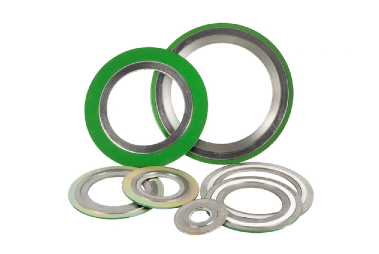
· Spiral wound gaskets: Engineered for high-pressure and high-temperature conditions.
· Flange gaskets: Specifically designed for pipeline and flange connections, offering durability and resistance to leaks.
Gaskets provide several key benefits:
· Easy installation and replacement: Quick to fit and remove during maintenance.
· Accommodates surface irregularities: Compensates for minor imperfections in mating surfaces.
· Reduces maintenance downtime: Reliable sealing minimizes unexpected failures.
· Cost-effective solution: Offers efficient static sealing without complex installation.
Recognizing when a gasket is compromised is crucial for preventing system failure:
· Visible fluid leakage: Oil, coolant, or other fluids escaping from joints or flanges.
· Deformation or cracking: Signs of wear, aging, or chemical damage.
· Frequent maintenance failures: Recurrent leaks despite proper installation.
· Pressure loss in the system: Reduced efficiency or performance due to compromised sealing.
Modern gaskets are designed to handle varying pressures, temperatures, and chemical exposures, but regular inspection and timely replacement remain essential for maintaining reliable operation and prolonging equipment life.
Rubber gaskets are often extruded or compression molded to create consistent shapes suitable for static sealing applications.
These methods allow for complex designs, including multi-material gaskets, providing better sealing in challenging conditions.
Ideal for sheet materials like cork, rubber, or PTFE, precision cutting ensures accurate dimensions for tight sealing.
Used for continuous rubber gaskets or O-rings, ensuring strong, durable bonds in circular shapes.
Gaskets can be tailored for temperature resistance, chemical compatibility, or mechanical strength to suit specific machinery requirements.
A seal prevents leakage between surfaces, usually in dynamic applications where components move relative to each other. Unlike gaskets, seals must handle rotational or linear motion.
· Dynamic: Seals for rotating shafts, pistons, or valves
· Static: Some seals also function in fixed assemblies but require elastomeric compression
· Rotary shaft seals
· Valve stem seals
· Mechanical seals for pumps and compressors
· Lip seals and O-rings in moving assemblies
Seals maintain constant contact with moving surfaces while tolerating friction, heat, and wear. Proper lubrication and material choice are critical for longevity.
Seals often require disassembly of equipment, which can be labor-intensive. Incorrect installation may lead to early failure or equipment damage.
Gaskets and seals are manufactured from a wide range of materials, each chosen for specific performance characteristics. Nitrile (Buna-N) is widely used for its excellent resistance to oils, fuels, and lubricants, making it ideal for automotive and hydraulic applications. EPDM offers superior resistance to water, steam, and a variety of chemicals, making it suitable for plumbing, HVAC, and industrial fluid systems. Silicone is preferred for high-temperature environments, such as engine components and ovens, due to its stability under heat. Fluoroelastomers (FKM/Viton) provide outstanding chemical and heat resistance, ideal for aggressive media and extreme industrial conditions. Neoprene is a versatile, general-purpose material resistant to weather, ozone, and moderate chemicals, often used in outdoor and mechanical applications.
Selecting the right material depends on several key factors: temperature range—ensuring the gasket or seal can withstand operating heat; chemical exposure—resisting degradation from oils, acids, or solvents; pressure requirements—withstanding system pressure without deforming; and wear and abrasion resistance—maintaining integrity under repeated motion or friction.
For demanding applications, manufacturers often provide custom-formulated gaskets and seals designed for extreme conditions, such as high pressure, aggressive chemicals, or fluctuating temperatures. These specialized compounds enhance durability, reliability, and performance, ensuring that the sealing solution meets the exact requirements of the equipment and environment, reducing maintenance costs and improving system longevity.
Feature | Gasket | Seal |
Application | Static | Dynamic or Static |
Movement | No relative motion | Handles motion (rotating/linear) |
Shape | Flat, sheet, or custom-cut | Circular, lip, or O-ring |
Material | Rubber, metal, composites | Elastomers, polymers, metal-reinforced |
Installation | Compressed between surfaces | Fits into groove or against shaft |
Maintenance | Replacement during disassembly | More frequent due to wear |
Typical Use | Flanges, pipes, engines | Pumps, shafts, valves |
Gaskets excel in static connections, while seals are essential where movement occurs. Misusing a gasket in a dynamic setting can lead to failure.
Gaskets are usually flat or layered, whereas seals are circular, flexible, or lip-shaped to accommodate motion.
Seals often require careful alignment and may need lubrication; gaskets are typically compressed between flanges or mating surfaces.
Seals must handle friction, rotation, and wear; gaskets primarily resist compression and environmental factors.
· Gaskets: HVAC, piping, engines
· Seals: Pumps, compressors, automotive systems
Proper alignment of mating surfaces is critical to effective sealing. Before installation, clean all surfaces thoroughly to remove debris, old gasket material, oil, or dirt. Any unevenness or contamination can compromise the gasket or seal, leading to leaks and reduced performance. Using precision tools to verify flatness and alignment ensures an even contact surface.
Follow the manufacturer’s recommended torque values when installing gaskets and seals. Over-tightening can crush or distort the gasket, while under-tightening may result in leaks. Applying even compression across all fasteners ensures the gasket maintains uniform contact with the surfaces, enhancing sealing performance and longevity.
Material selection is essential for durability. Consider chemical exposure, temperature, pressure, and wear resistance when choosing between elastomers, metals, or composite materials. The right material prevents premature failure and maintains consistent performance under operating conditions.
Regular inspections help identify signs of wear, cracking, or deformation early. Replace gaskets and seals at the first indication of failure to prevent leaks, equipment downtime, and costly repairs. Proactive maintenance maximizes reliability and extends the life of industrial systems.
Q1: Can a gasket be used as a seal, or vice versa?
A: Gaskets are for static applications; seals are needed for dynamic ones. Misusing them may cause leaks.
Q2: How do I know when a gasket or seal has failed?
A: Signs include fluid leakage, pressure loss, unusual noises, or visible wear.
Q3: Are all seals reusable after disassembly?
A: Not always; many seals require replacement to ensure proper function.
Q4: What are the consequences of using the wrong material?
A: Premature failure, leaks, equipment damage, and safety risks.
Q5: How often should gaskets and seals be inspected or replaced?
A: Regularly during maintenance schedules; more frequently in high-temperature or high-pressure environments.
Gaskets and seals play a critical role in maintaining the efficiency and safety of machinery and industrial equipment. While gaskets are ideal for static connections, seals are designed to accommodate movement and dynamic conditions, ensuring leak-free operation even under pressure or motion. Choosing the right component, applying it correctly, and performing routine maintenance are essential steps to maximize equipment reliability, reduce downtime, and extend service life. For those seeking high-quality gaskets, durable seals, and expert guidance on selecting the most suitable solutions for specific applications, DONHONSIL offers a comprehensive range of industrial sealing products and professional support. Contact them today to learn more and ensure your equipment runs smoothly and efficiently.


