
Engineered to seal,
The last line of defense against leakage
+86-13566064802

Views: 0 Author: Site Editor Publish Time: 2026-04-16 Origin: Site
Proper storage and maintenance of gaskets are essential to ensure long-term reliability and performance. Gaskets, whether rubber, silicone, metal, or fibre-based, can degrade over time if stored improperly, leading to leaks, equipment downtime, and safety risks. Understanding shelf life, service life, and inspection requirements helps prevent failures and ensures that gaskets remain effective throughout their operational life.
Shelf life refers to the period during which a gasket remains suitable for use while being stored under controlled conditions. This timeframe does not include active service or operational use but is strongly influenced by the storage environment, material composition, and exposure factors. Key elements that affect shelf life include temperature, humidity, ultraviolet (UV) light, ozone, and contact with chemicals or vapors. For example, elastomeric gaskets such as silicone or Viton can retain their functional properties for decades if stored properly, while natural rubber or fiber-based gaskets typically have a much shorter shelf life. Proper storage ensures that the gasket retains its elasticity, flexibility, and sealing capability, which are critical for maintaining a reliable seal once installed.
Service life is the duration a gasket reliably performs its sealing function during actual operation. Even gaskets stored under ideal conditions can experience a shorter service life if they are subjected to extreme operating pressures, wide temperature fluctuations, aggressive chemical exposure, or mechanical stress. Service life is influenced by both material properties and operational conditions. For instance, a gasket in a low-pressure water system may last years, while the same gasket in a high-temperature chemical pipeline may degrade much faster. Understanding service life is essential for planning preventive maintenance, replacement schedules, and ensuring the safety and efficiency of industrial systems.
Exceeding the recommended shelf life does not automatically render a gasket unusable, but it does make inspection and testing critical before installation. Visual inspections should focus on cracks, hardening, discoloration, loss of elasticity, or any deformation. Functional testing, such as pressure tests or leak simulations, may be necessary for critical applications to confirm the gasket still meets performance standards. In many cases, particularly for high-risk or safety-critical systems, it may be preferable to use re-manufactured or newly fabricated gaskets rather than relying on older stock. Regular inspection and testing of both stored and in-service gaskets prevent unexpected failures, ensure reliability, and extend overall equipment life.
Proper temperature and humidity control is critical for preserving gasket integrity. The recommended storage temperature range is between 15°C and 25°C (59°F to 77°F). Temperatures outside this range can accelerate aging, hardening, or softening of elastomers, foams, and other gasket materials. For example, high heat may cause silicone or EPDM gaskets to lose flexibility, while low temperatures can make rubber gaskets brittle and prone to cracking.
Relative humidity should be maintained below 70%. Excessive moisture can affect fiber-based, cork, or compressed non-asbestos gaskets, causing swelling, mold growth, or chemical reactions with fillers and binders. Controlled humidity prevents degradation, preserves elasticity, and reduces the risk of premature failure during installation or operation.
Gaskets must be protected from environmental factors that can accelerate aging or compromise performance. Direct sunlight and UV exposure can break down polymers and elastomers, leading to discoloration, brittleness, or surface cracking. Ozone, commonly generated by electrical equipment, and chemical vapors, such as solvents, fuels, or acids, can also react with gasket compounds, reducing flexibility, hardness, or chemical resistance.
Proper storage ensures that materials maintain their original sealing properties. For critical applications, even minor exposure to UV or chemical vapors can result in leaks or catastrophic failures, highlighting the importance of controlled storage.
Gaskets should always be stored flat to avoid permanent warping, curling, or edge deformation. Stacking gaskets improperly, placing heavy objects on top, or bending them can compromise the contact surface, affecting their ability to seal effectively.
Avoid compression or tension on gaskets during storage, as prolonged pressure can create set marks, reduce compressibility, and distort shapes, particularly in softer materials like foam, silicone, or cork composites. Handling gaskets with care, including using protective covers or separating layers with paper or plastic sheets, helps maintain their form and performance.
Adhering to these storage guidelines maximizes shelf life, maintains elasticity, and ensures consistent performance once the gasket is installed. Properly stored gaskets are less likely to experience unexpected leaks, reduced sealing efficiency, or mechanical failure, even after extended periods in storage.
Industries such as automotive, oil and gas, pharmaceuticals, and food processing rely on stored gaskets for emergency replacements or regular maintenance operations. Maintaining optimal conditions ensures gaskets are ready for immediate use, reducing downtime, preventing costly failures, and extending equipment life.
By following recommended temperature, humidity, exposure, and handling practices, companies can protect their investment in gaskets, guarantee operational reliability, and meet compliance and safety standards across various applications. Proper storage is a simple yet critical step in ensuring gasket longevity and performance in any industrial system.
Material | Typical Shelf Life | Inspection Points |
Silicone (VMQ/PVMQ) | 20 years | Cracks, discoloration, loss of flexibility |
Viton (FKM) | 20 years | Hardening, swelling, discoloration |
Neoprene (CR) | 15 years | Brittleness, ozone-induced cracks |
EPDM | 15 years | Hardening, softening, discoloration |
Butyl (IIR) | 15 years | Tackiness, cracking, loss of elasticity |
Nitrile (NBR) | 15 years | Hardening, swelling, cracking |
SBR | 5 years | Discard if significant degradation |
Natural Rubber (NR) | 5 years | Tackiness, cracking |
Non-Asbestos Fibre | 5 years | Visual inspection, wear, drying |
Natural Fibre | 2 years | Moisture damage, embrittlement |
Note: Actual shelf life depends on material formulation, storage environment, and exposure history.
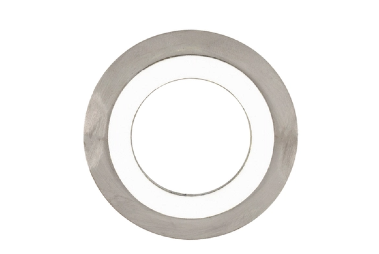
Proper inspection and testing are essential to ensure that gaskets remain reliable, especially when stored for extended periods or used in critical applications. Even gaskets within their recommended shelf life may degrade if exposed to environmental stressors, making regular evaluation a vital step in maintenance.
Start with a thorough visual inspection. Look for cracks, discoloration, hardening, tackiness, or loss of elasticity, as these are early signs of material degradation. Pay attention to edge integrity and any signs of warping, curling, or compression marks that may have occurred due to improper stacking or handling. Surface contamination, such as oil, dust, or chemical residues, should also be noted, as it may interfere with sealing performance. Identifying these issues early prevents the installation of compromised gaskets that could lead to leaks or system failures.
For critical applications, visual inspection alone may not be sufficient. Conduct functional tests, including pressure or leak checks, to verify the gasket’s ability to maintain a seal under operational conditions. Flexibility tests are also recommended, especially for elastomeric and foam gaskets, to ensure they retain their compressibility and resilience. Functional testing is particularly important for high-pressure, high-temperature, or chemically aggressive environments where failure could have serious consequences.
Re-inspection frequency should align with manufacturer-specific recommendations, material type, storage conditions, and application criticality. For example, soft rubber gaskets in high-humidity environments may require more frequent checks than metal-reinforced or high-temperature composites stored under ideal conditions.
Gaskets showing severe degradation or damage should always be discarded. Non-critical applications may allow limited reuse if inspection and functional testing confirm sufficient integrity. However, safety, performance, and compliance should always guide the final decision.
Implementing these inspection and testing guidelines ensures gaskets perform as expected, reduces the risk of leaks, prevents costly downtime, and maintains the long-term reliability of industrial systems.
Non-asbestos fibre gaskets are widely used due to their heat resistance, compressibility, and chemical stability, but they are susceptible to drying, weathering, and filler degradation over time. Their shelf life depends heavily on fibre stability and irreversible chemical changes that may occur during storage or exposure to environmental factors. To maintain reliability, store these gaskets in a dry, temperature-controlled environment, away from UV light, ozone, and chemical vapors. Minimize handling to prevent compression or fibre damage, and always perform a thorough inspection before reuse to ensure integrity and safety in critical applications.
1. What is the difference between shelf life and service life?
Shelf life is for storage; service life is during actual use.
2. How should gaskets be stored to maximize lifespan?
Store flat, in a cool, dry, UV-free environment, avoiding chemical vapours and excessive compression.
3. How often should stored gaskets be inspected?
Inspection frequency depends on material and criticality—typically annually for long-shelf-life elastomers, more frequently for fibre-based gaskets.
4. Can gaskets beyond recommended shelf life still be used?
Only after careful inspection and testing; discard if material shows hardening, cracking, or discoloration.
5. What tests ensure a gasket is still suitable for service?
Visual inspection, flexibility check, and functional testing under pressure or load conditions.
Proper gasket storage, handling, and inspection are essential for long-term reliability. Shelf life provides a guideline, but inspection and functional testing ultimately determine usability. Following material-specific recommendations ensures safety, performance, and operational efficiency. Gaskets stored correctly reduce leaks, prevent downtime, and extend equipment life. For high-quality gaskets and expert advice on storage, shelf life, and service life, contact DONHONSIL, a trusted provider of industrial sealing solutions, to ensure safety and long-term reliability in all your applications.


