No.67,Xinhua Road, Xiaolin Town,
Cixi City,Zhejiang,China 315300
Call Us
+86-13566064802

Views: 0 Author: Site Editor Publish Time: 2026-07-31 Origin: Site
Industrial fluid sealing relies on precise metallurgical matching. A single gasket failure in high-pressure or corrosive environments can result in catastrophic leaks, unplanned downtime, and severe safety hazards. Engineers and procurement teams frequently face ambiguity when specifying stainless steel grades for spiral wound gaskets. Choosing between SS316 and SS316L without understanding the specific application thresholds leads to either over-engineering or under-specifying, which inevitably causes premature failure.
Resolving this requires moving beyond basic material data sheets. This guide breaks down the exact metallurgical differences, performance trade-offs, and risk mitigation strategies required to confidently specify SS316 vs SS316L Spiral Wound Gaskets for your critical piping systems.
Carbon Content is the Deciding Factor: The primary distinction is maximum carbon content (SS316 allows up to 0.08%, while SS316L is restricted to 0.03%), directly impacting weldability and corrosion resistance.
Sensitization Risks: SS316 is susceptible to carbide precipitation (sensitization) at high temperatures or during welding, which can lead to intergranular corrosion. SS316L mitigates this risk.
The Upgrade from SS304: While SS304 is a common baseline, SS316/SS316L provides critical pitting resistance due to the addition of molybdenum, making it the mandatory upgrade for chloride-rich or marine environments.
Mechanical Parity in Gasket Applications: While standard SS316 has slightly higher tensile strength at room temperature, this difference is negligible under standard flange compressive loads in SWG applications.
Dual Certification Reality: Many modern manufacturers supply dual-certified 316/316L material, satisfying the requirements of both grades and simplifying procurement.
Table of Contents
Establishing baseline material chemistry ensures the gasket winding and rings can withstand the target media without degrading. The fundamental difference between SS316 and SS316L lies in their carbon composition. This single variable dictates how the metal behaves under thermal stress, welding procedures, and long-term chemical exposure in the field.
Standard SS316 stainless steel contains a maximum of 0.08% carbon. Its alloy matrix includes 16-18% chromium, 10-14% nickel, and 2-3% molybdenum. This specific blend provides excellent general corrosion resistance compared to standard 304 stainless steel. The higher carbon content gives standard 316 a slight edge in high-temperature tensile strength, though this advantage rarely translates to better performance in static sealing applications. The presence of nickel stabilizes the austenitic structure, ensuring the metal remains non-magnetic and ductile even at lower temperatures.
The "L" in SS316L denotes "Low Carbon," restricting the maximum carbon content to 0.03%. It maintains the exact same chromium, nickel, and molybdenum levels as standard 316. This reduction in carbon is engineered specifically to prevent carbon from binding with chromium during thermal exposure. By keeping the carbon levels below 0.03%, the alloy retains its chromium in the matrix, ensuring the passive oxide layer remains intact even after exposure to welding temperatures or prolonged heat in process lines.
Both grades utilize 2-3% molybdenum to resist pitting and crevice corrosion. This is particularly relevant in chloride-rich environments like offshore platforms, coastal refineries, and chemical plants handling halogenated compounds. Molybdenum fortifies the passive oxide layer, preventing localized chloride attacks that typically destroy standard austenitic stainless steels like 304.
When evaluating materials for aggressive chemical service, engineers often look at the Pitting Resistance Equivalent Number (PREN). The formula is generally expressed as PREN = %Cr + 3.3(%Mo) + 16(%N). Because both 316 and 316L contain the same amounts of chromium and molybdenum, their PREN values are nearly identical, typically ranging between 23 and 28. This significantly outperforms standard SS304, which lacks molybdenum and has a PREN of around 18. This numerical difference translates directly to field reliability when flanges are exposed to brackish cooling water or acidic process fluids.
Alloy Grade | Max Carbon (%) | Chromium (%) | Nickel (%) | Molybdenum (%) | Typical PREN |
|---|---|---|---|---|---|
SS304 | 0.08 | 18.0 - 20.0 | 8.0 - 10.5 | 0.0 | ~18 |
SS316 | 0.08 | 16.0 - 18.0 | 10.0 - 14.0 | 2.0 - 3.0 | 23 - 28 |
SS316L | 0.03 | 16.0 - 18.0 | 10.0 - 14.0 | 2.0 - 3.0 | 23 - 28 |
The seemingly minor difference in carbon content dramatically alters how the gasket performs in the field. Spiral wound gaskets are highly engineered components, and their manufacturing process inherently involves localized heating. Understanding how the metallurgy responds to this heat is critical for preventing premature joint failure.
When standard SS316 is exposed to the temperature danger zone—typically 425°C to 815°C (800°F to 1500°F)—carbon precipitates to the grain boundaries. This process is known as sensitization. The carbon binds with chromium to form chromium carbides. This depletes adjacent areas of chromium, dropping the local chromium content below the 10.5% threshold required to maintain the passive oxide layer. The metal effectively loses its stainless properties in these microscopic zones.
Sensitized SS316 windings become highly vulnerable to rapid localized attack when exposed to corrosive acids or chemical solvents. Because the chromium has been depleted at the grain boundaries, the aggressive media easily penetrates the metal structure, causing intergranular corrosion. The gasket winding can literally crumble from the inside out, leading to a sudden loss of bolt load and a subsequent blowout. SS316L maintains its structural integrity and corrosion resistance in these exact same environments because the lower carbon content prevents carbide precipitation from occurring in the first place.
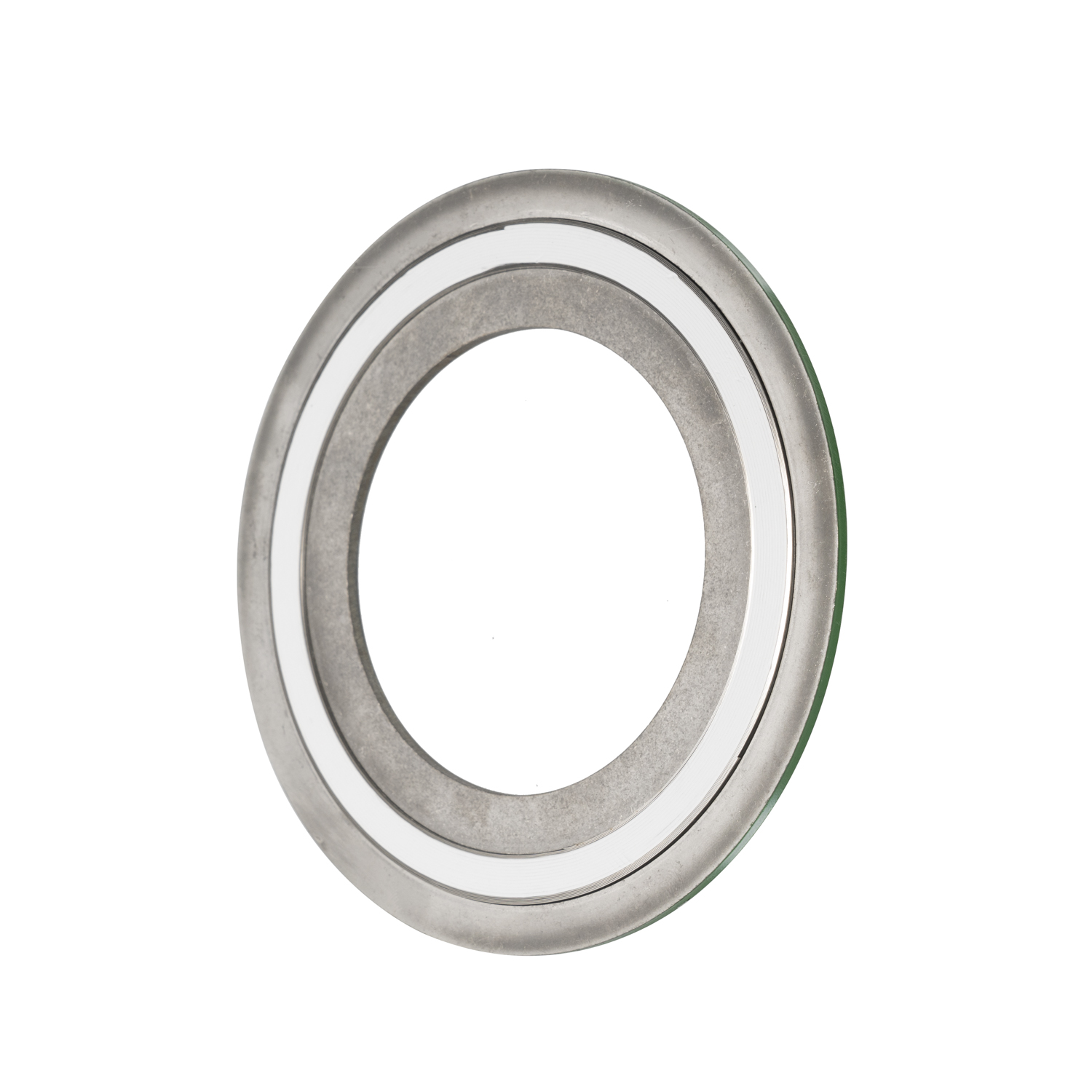
The construction of a spiral wound gasket requires spot welding at the inner and outer diameters of the metallic winding strip. This prevents the alternating layers of metal and filler from unspooling during handling and installation. Standard SS316 experiences localized sensitization at these specific weld points due to the intense heat input. SS316L eliminates this weld-decay vulnerability. By using the low-carbon variant, manufacturers ensure the entire winding, including the critical termination welds, remains uniformly corrosion-resistant.
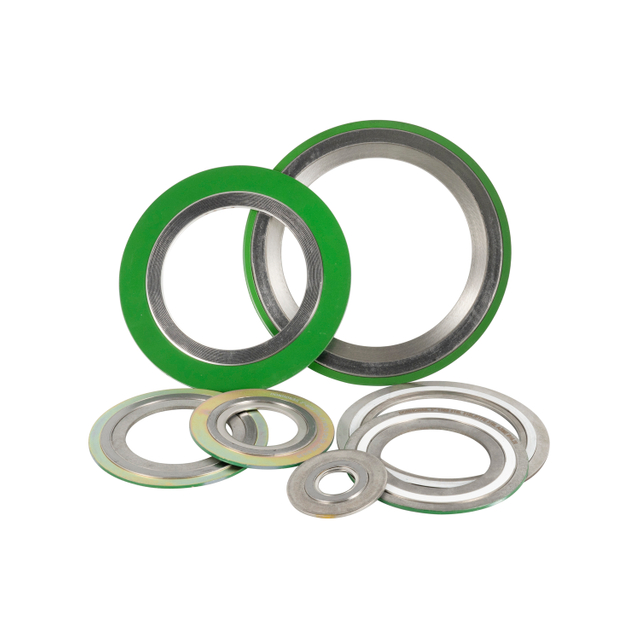
A spiral wound gasket consists of multiple components: the metallic winding strip, the soft filler material, the inner ring, and the outer centering ring. Metallurgy can be mixed depending on the application to optimize performance. It is common practice to differentiate between the metallurgy of these components. For example, a standard carbon steel outer ring (painted or coated to resist atmospheric corrosion) is often paired with an SS316L winding and inner ring. The inner ring and winding are the only components in direct contact with the process media, so they require the upgraded metallurgy, while the outer ring simply serves to center the gasket within the bolt circle and prevent over-compression.
Selecting the right gasket requires evaluating multiple operational dimensions to ensure long-term joint integrity. Engineers must look beyond the metal itself and consider how it interacts with the filler material, the flange faces, and the specific process conditions.
Engineers must evaluate continuous operating temperatures versus intermittent spikes. While both SS316 and SS316L handle high heat, you must match the metal grade to the filler material limits. The filler is almost always the limiting factor in a spiral wound gasket assembly. Pairing a high-temperature SS316L winding with a PTFE filler limits the entire gasket to the PTFE threshold, which is typically around 260°C (500°F). If the process exceeds this temperature, the PTFE will degrade and off-gas, regardless of the metal's capability. Conversely, using flexible graphite allows the gasket to utilize the full thermal range of the stainless steel, pushing the continuous operating limit up to 454°C (850°F) in oxidizing environments, and much higher in reducing atmospheres.
Assessing media concentration, pH levels, and the presence of chlorides is mandatory before specifying a gasket. SS316L is the mandatory baseline for pharmaceutical, marine, and severe chemical processing applications. Engineers must bypass SS304 entirely and step up to SS316 or SS316L when exposed to marine atmospheres, brackish water, or mild acids. The lack of molybdenum in 304 will lead to rapid pitting and crevice corrosion under the flange face. When dealing with highly concentrated sulfuric or phosphoric acids, even 316L may not be sufficient, requiring a step up to specialty alloys like Alloy 20 or Hastelloy.
There is a common misconception in the field that SS316L is "too weak" for high-pressure flanges due to its lower carbon content. In reality, the spiral wound design and filler material dictate the compressibility and recovery of the seal. The slight yield strength difference between standard 316 and 316L is entirely irrelevant in most bolted joint assemblies under standard flange compressive loads. The V-shaped profile of the metal winding acts like a spring. When the bolts are torqued, the winding compresses, and the filler material is forced into the microscopic imperfections of the flange face (typically a 125-250 AARH finish). Both 316 and 316L provide more than enough radial strength to prevent buckling under standard ASME B16.5 flange loads.
API 600 and ASME B16.20 standards dictate material color coding for spiral wound gaskets to ensure correct installation in the field. Both 316 and 316L are designated by a solid green stripe on the outer edge of the centering ring. In contrast, 304 uses a yellow stripe. Because the visual color coding for 316 and 316L is identical, ensuring compliance with specific piping class specifications requires verifying the material stamps physically engraved on the outer ring. The filler material is also color-coded with a secondary stripe; for example, a gray stripe indicates flexible graphite, while a white stripe indicates PTFE.
Procurement strategies must account for material availability and manufacturing trends to ensure project timelines are met without compromising quality. The landscape of stainless steel production has shifted, making the choice between these two grades much simpler for modern facilities.
Historically, SS316L was considered a premium material with longer lead times and limited availability compared to standard 316. However, modern Argon Oxygen Decarburization (AOD) refining processes have made low-carbon stainless steel much easier and more efficient to produce. Today, major gasket manufacturers maintain extensive inventories of SS316L. In many regions, SS316L is actually more readily available off-the-shelf than standard high-carbon SS316, especially for standard ASME flange sizes.
Most high-quality steel mills now produce stainless steel that meets both the low carbon limit of 316L and the slightly higher mechanical strength requirements of 316. This is known as dual-certified 316/316L material. Specifying dual-certified gaskets simplifies inventory management, reduces procurement risk, and ensures compliance with a broader range of piping specifications. By stocking dual-certified gaskets, maintenance departments can consolidate their inventory, reducing the number of distinct SKUs they need to manage while ensuring they have the right material for both high-temperature and highly corrosive applications.
When evaluating the specification of spiral wound gaskets, the focus must remain on long-term joint reliability. Specifying standard SS316 in an application that experiences thermal cycling or requires frequent maintenance welding on adjacent piping introduces unnecessary risk. The catastrophic cost of a flange leak, environmental fines, and emergency maintenance labor far outweighs any marginal differences in raw material procurement. Standardizing on SS316L or dual-certified material eliminates the risk of weld decay and intergranular corrosion, providing a wider safety margin for process variations.
Even with the correct material specified, improper installation or environmental factors can compromise the seal. Field execution is just as critical as metallurgical selection.
Pairing SS316/SS316L gaskets with dissimilar flange metallurgies in the presence of an electrolyte creates a galvanic cell. This leads to accelerated corrosion of the less noble metal. For example, installing a 316L gasket between standard carbon steel flanges in a wet, salty environment will cause the carbon steel flange faces to corrode rapidly. Mitigation requires proper material mapping. If the galvanic potential between the flange and the gasket is high, engineers should utilize isolating gasket kits or ensure the system is properly coated and protected from external moisture.
Pairing a high-performance SS316L winding with an inappropriate filler material negates the metallurgical benefits of the steel. Using a low-temperature filler like PTFE in a high-temperature steam application will result in immediate filler degradation and joint failure. Mitigation involves cross-referencing both metal and filler temperature and chemical limits against actual process data. Always consult the manufacturer's pressure-temperature (P-T) charts for the specific combination of winding and filler.
Receiving standard 304 or high-carbon 316 when 316L was specified can lead to catastrophic failure in critical services. The global supply chain is susceptible to mislabeled materials. Mitigation requires strict quality control procedures at the receiving dock.
Mandate Material Test Reports (MTRs) for all critical service gaskets prior to shipment.
Perform Positive Material Identification (PMI) using handheld XRF analyzers on a random sampling of received gaskets.
Visually inspect the outer ring stamping to ensure it explicitly reads "316L" and matches the MTR documentation.
Verify the ASME B16.20 color coding (Green stripe for 316/316L) matches the stamped designation.
While SS316 is a highly capable alloy, SS316L provides critical insurance against weld decay and intergranular corrosion in high-temperature or aggressive chemical environments. For standard, non-corrosive, lower-temperature applications, SS316 or even SS304 may suffice. For critical applications, welded components, high-chloride environments, or severe media, SS316L is non-negotiable. When in doubt, default to dual-certified 316/316L to cover all bases and ensure maximum reliability across your piping systems.
Drawing on more than 20 years of sealing craftsmanship, Ningbo Dongheng sealing develops graphite, PTFE, composite gasket, packing, and sealing-sheet solutions for mechanical, chemical, power, marine, food, pharmaceutical, aerospace, electronics, and related industries. Its OEM/ODM capabilities, technical consultation, emergency-order support, and after-sales service help industrial buyers source dependable standard and customized sealing products.
Review current piping specifications to ensure material grades match process media requirements and operating temperatures.
Audit existing gasket inventory for dual-certification status to consolidate stock and eliminate redundant SKUs.
Consult with a sealing specialist to verify filler material compatibility with your chosen stainless steel grade.
Implement mandatory MTR tracking and PMI verification for all critical flange installations.
A: Yes, in almost all cases. SS316L meets or exceeds the corrosion resistance of 316, and dual-certified materials meet the mechanical requirements of both.
A: No, it stands for "Low Carbon." It actually improves performance after high-temperature exposure by preventing carbide precipitation.
A: SS316 and SS316L contain 2-3% molybdenum, which provides significantly better pitting and crevice corrosion resistance in chloride environments compared to SS304. SS304 should be avoided in marine or highly corrosive chemical services.
A: No, they look identical. Both are color-coded with a green stripe on the outer ring per ASME B16.20. Verification requires reading the stamped material designation or checking MTRs.
A: The metal winding can typically withstand up to 815°C (1500°F), but the actual maximum temperature is often dictated by the filler material—e.g., PTFE is limited to 260°C (500°F), while flexible graphite can go much higher.
A: The steel is refined to have a maximum carbon content of 0.03% (meeting 316L specs) while being alloyed to achieve the minimum yield and tensile strength required for standard 316, satisfying both standards simultaneously.