


Views: 0 Author: Site Editor Publish Time: 2026-06-08 Origin: Site


Ever wondered how industries prevent dangerous leaks under extreme conditions? Gaskets play a vital role in sealing joints. Spiral wound gaskets, in particular, offer reliable protection in harsh environments. In this post, you’ll learn what spiral wound gaskets are, why they matter, and where they are essential.
Table of Contents

Spiral wound gaskets excel in sealing under extreme conditions. They handle high pressure and temperature better than many other gasket types. This makes them vital in industries where safety and reliability matter most.
These gaskets combine metal strips and soft filler materials, such as graphite or PTFE. The metal provides strength, while the filler offers flexibility. This mix allows the gasket to compress tightly and maintain a seal even as pressures and temperatures rise or fluctuate.
For example, in a steam pipeline operating at 400°C and 150 bar, a spiral wound gasket can maintain a leak-proof seal, preventing costly shutdowns or hazards. Their resilience to thermal cycling reduces the risk of gasket failure over time.
The metal strip, often stainless steel or alloy steel, gives the gasket structural integrity. It resists deformation under pressure. The filler material adapts to flange surface irregularities, ensuring no gaps form.
Graphite fillers withstand high temperatures and resist chemical attack, making them ideal for harsh environments. PTFE fillers provide excellent chemical resistance in corrosive fluid applications. This combination extends gasket life and reduces maintenance frequency.
Spiral wound gaskets are widely used in:
Oil & Gas: Pipelines, valves, and refineries require seals that resist high pressure, temperature, and corrosive fluids.
Chemical Processing: Plants handle aggressive chemicals needing gaskets that resist corrosion and maintain integrity.
Power Plants: Boilers, turbines, and heat exchangers operate under extreme heat and pressure, demanding reliable sealing.
In all these sectors, spiral wound gaskets prevent leaks that could cause environmental damage, safety risks, or costly downtime. Their adaptability to different flange types and operational conditions makes them a go-to sealing solution.
Tip: Always verify the operating pressure and temperature ranges before selecting a spiral wound gasket to ensure it meets your system’s demands and avoids premature failure.
Selecting the right gasket for industrial applications can be tricky. Engineers often face several hurdles that affect sealing performance and safety.
There are many gasket types available: spiral wound, ring joint, sheet, and more. Each has different designs and materials tailored for specific conditions. This variety can confuse engineers, leading to wrong choices. For example, using a non-metallic gasket in a high-pressure steam line can cause leaks or failures.
Spiral wound gaskets themselves come in multiple variants, such as those with inner rings, outer rings, or both. Knowing which design fits your flange type and operational conditions is crucial. Misunderstanding these differences can result in poor sealing or premature gasket damage.
Low-quality gaskets pose serious risks, especially under high pressure or temperature. Inferior materials may deform, crack, or lose elasticity. This leads to leaks, which can cause safety hazards, environmental damage, or costly downtime.
For instance, a substandard gasket in a chemical plant pipeline exposed to corrosive fluids might fail quickly. The result? Production halts and expensive repairs. Investing in high-quality gaskets reduces these risks and enhances system reliability.
Choosing the right gasket means understanding several technical specs:
Pressure Ratings: Gaskets must withstand maximum operating pressures. Exceeding ratings causes gasket blowout.
Flange Compatibility: Gasket design must match flange type, size, and surface finish. Mismatches create sealing gaps.
Chemical Resistance: Fillers and metals must resist process fluids. For example, graphite fillers resist high temperatures and many chemicals, while PTFE excels against strong acids.
Ignoring these specs often leads to gasket failures or leaks.
Real-world examples highlight these challenges:
A refinery used a gasket without an inner ring in a high-pressure steam line. The gasket deformed, causing leaks and forced shutdown.
A chemical plant selected a gasket with incompatible filler material for acidic fluids. Corrosion damaged the gasket, leading to frequent replacements.
An oil pipeline operator chose a gasket type not suited for their flange surface finish. Misalignment caused uneven compression and leakage.
These cases show how critical proper gasket selection is for safe, efficient operations.
Tip: Always cross-check gasket design, material, and specs against your system’s pressure, temperature, and chemical conditions to prevent costly failures.
Spiral wound gaskets come in various types, each designed to meet specific sealing needs in industrial settings. Understanding these types helps you pick the right gasket for your application, ensuring safety and efficiency.
Design: This gasket features a spiral wound metal strip combined with a soft filler material, all enclosed by an outer ring.
Function: The outer ring acts as a centering device and controls radial flow during compression. This prevents the gasket from spreading out too much, maintaining its shape and sealing ability.
Applications: Ideal for high-pressure and high-temperature environments such as petrochemical plants, refineries, and power plants.
Benefits: It offers strong sealing, prevents over-compression, and ensures a leak-proof joint.
Design: Similar to SOR but includes an inner ring instead of an outer ring.
Function: The inner ring provides extra strength, stopping the gasket from being compressed too much inwardly.
Applications: Used where gaskets face extreme pressures and temperatures needing extra support.
Benefits: Improves durability and sealing performance, reducing the chance of failure.
Design: Combines both inner and outer rings along with the spiral wound metal and filler.
Function: The dual rings offer maximum strength and stability, making the gasket highly resilient.
Applications: Best for critical uses in oil & gas, chemical processing, and high-pressure steam systems.
Benefits: Provides superior sealing, preventing leaks and boosting safety.
Design: Like SIO but includes bolt holes in the outer ring.
Function: Bolt holes help align the gasket precisely during installation.
Applications: Used where exact gasket placement is essential, such as high-pressure pipelines and vessels.
Benefits: Makes installation easier and reduces misalignment risks, improving seal quality.
Design: Only the spiral wound metal strip and filler; no rings.
Function: Relies on compression of the spiral wound layers for sealing.
Applications: Suitable for flanged joints that have grooves or features to hold the gasket.
Benefits: Flexible and cost-effective for applications not needing rings.
Design: Includes a centering device, usually an inner metal or plastic ring, to align the gasket.
Function: Helps position the gasket accurately during assembly.
Applications: Ideal for high-hazard areas needing quick, precise gasket placement.
Benefits: Ensures reliable sealing and reduces installation errors.
Type |
Design |
Use |
Benefit |
|---|---|---|---|
SOR (Outer Ring) |
Outer ring |
High pressure/temp |
Strong, leak-proof |
SIR (Inner Ring) |
Inner ring |
Extreme conditions |
Durable, reliable |
SIO (Inner & Outer Rings) |
Inner + outer rings |
Oil & gas, chemicals |
Superior seal |
SIOH (Rings with Bolt Holes) |
Dual rings + bolt holes |
High-pressure pipelines |
Accurate fit, less leaks |
SWR (No Rings) |
No rings |
Flanged joints |
Flexible, cost-effective |
SCD (Centering Device) |
Centering device |
Precise installations |
Easy alignment, reliable |
Note: Choosing the right spiral wound gasket type depends on your flange design, pressure, temperature, and installation needs—consult experts to avoid costly mistakes.
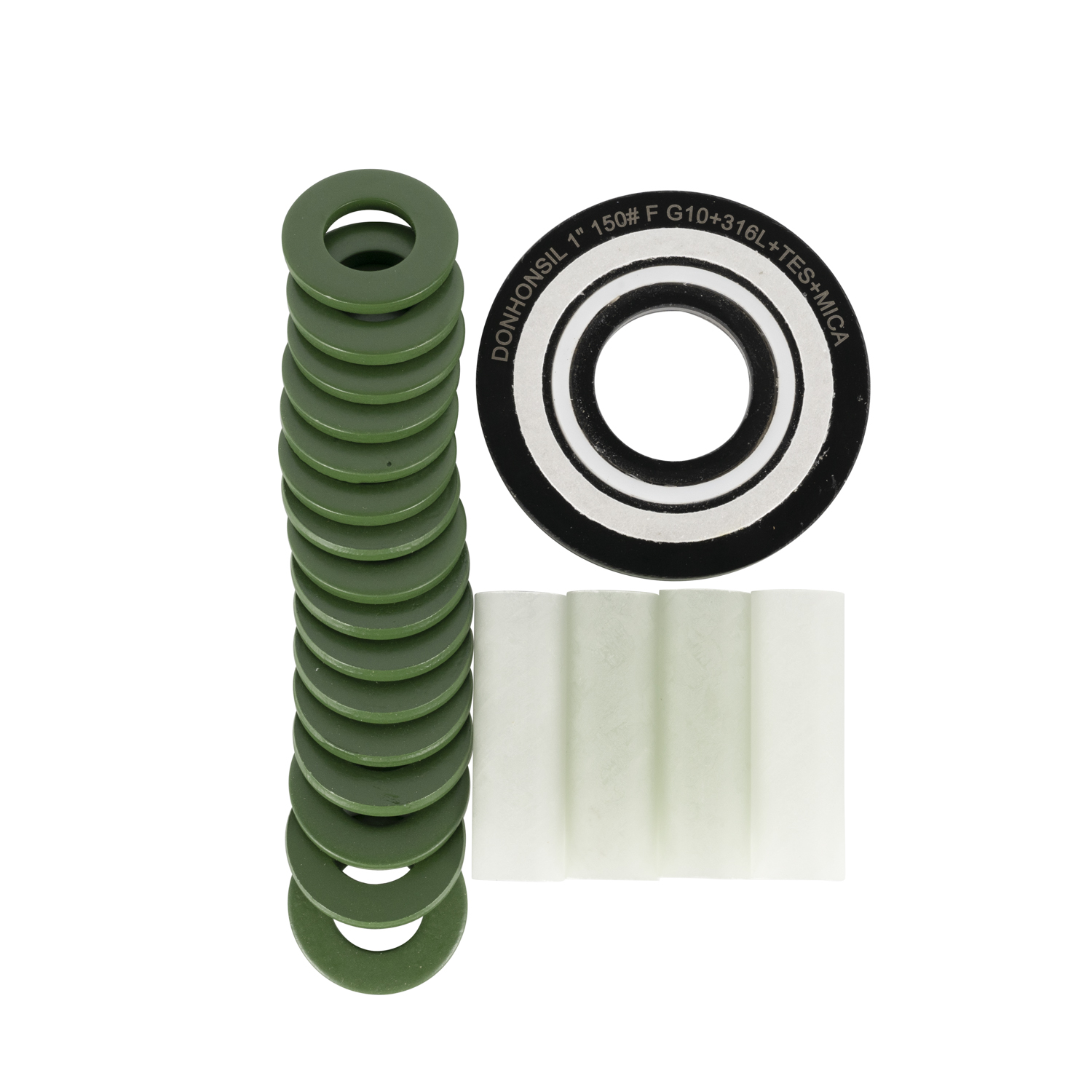
Choosing the proper spiral wound gasket is crucial for safe, efficient industrial operations. The right gasket ensures a leak-free seal, protects equipment, and minimizes downtime. Here are key factors to consider when selecting a gasket for your system.
First, identify your system’s maximum operating pressure and temperature. Spiral wound gaskets are designed for high-pressure, high-temperature environments, but each type and material has limits. For example, stainless steel with graphite filler can handle temperatures up to 600°C and pressures above 150 bar in many cases. Exceeding these limits risks gasket failure.
Always check manufacturer specifications to confirm the gasket suits your operating conditions. Remember, fluctuating temperatures or pressure surges require gaskets that maintain sealing integrity under cycling stresses.
The filler material inside the spiral wound gasket provides flexibility and chemical resistance. Two common fillers are graphite and PTFE.
Graphite: Excellent for high temperatures and many chemicals. It resists thermal degradation and performs well in steam, hydrocarbons, and acidic environments. However, graphite may absorb moisture, so it’s less ideal in wet or oxidizing conditions.
PTFE (Polytetrafluoroethylene): Offers outstanding chemical resistance, especially against aggressive acids and alkalis. It performs well in corrosive chemical processing but has lower temperature limits (usually up to 260°C). PTFE is also non-stick and resists most solvents.
Choosing between graphite and PTFE depends on the chemical nature of your fluid, temperature, and pressure. Consult chemical compatibility charts or experts to avoid premature gasket degradation.
Your flange design influences gasket choice. Spiral wound gaskets work best with raised face, flat face, or ring-type joint flanges. The flange surface finish matters too; rough or uneven surfaces require more flexible fillers like graphite to fill gaps.
If your flange has grooves or special features, gaskets without inner or outer rings (like SWR types) might fit better. Conversely, for smooth or thin flanges, gaskets with inner and/or outer rings provide extra support and prevent gasket extrusion.
Matching gasket design to flange type ensures proper compression, alignment, and sealing.
Industrial sealing is complex. Even small mistakes in gasket selection can cause leaks, equipment damage, or safety hazards. Consulting gasket manufacturers or sealing experts helps you:
Understand specific material properties and limitations
Match gasket types to your flange and operating conditions
Customize gasket dimensions and materials for unique applications
Access technical support during installation and maintenance
Experts can recommend the best spiral wound gasket type and filler material, ensuring long-term reliability and cost savings.
Tip: Always provide your gasket supplier with detailed operating data—pressure, temperature, fluid type, flange specs—to get tailored recommendations and avoid costly gasket failures.
Selecting the right materials and ensuring high manufacturing quality are crucial for spiral wound gaskets to perform reliably in industrial settings. These gaskets must endure extreme pressures, temperatures, and corrosive environments without failing. Let’s explore the common metals, filler materials, quality standards, and how precision manufacturing boosts gasket performance.
The metal strip forms the backbone of spiral wound gaskets, providing strength and resilience. Typical metals include:
Stainless Steel SS304: Offers good corrosion resistance and mechanical strength. Used in general industrial applications where moderate corrosion and temperature resistance are needed.
Stainless Steel SS316: Contains molybdenum, improving resistance to chlorides and harsh chemicals. Ideal for chemical processing or marine environments.
Alloy Steel: Provides higher strength and temperature tolerance. Suitable for heavy-duty applications, such as power plants or oil refineries.
Inconel: A nickel-chromium alloy with excellent oxidation and corrosion resistance at very high temperatures. Used in extreme environments like aerospace or high-temperature chemical reactors.
Choosing the right metal depends on your operating conditions, especially chemical exposure and temperature extremes. For example, SS316 is preferred in corrosive chemical plants, while Inconel suits ultra-high temperature steam lines.
The filler material inside the spiral wound layers ensures flexibility and fills flange surface irregularities. The two most common fillers are:
Graphite: Excellent for high temperatures (up to 600°C or higher) and many chemicals. It resists thermal degradation and maintains sealing under thermal cycling. However, graphite can absorb moisture, so it’s less ideal for wet oxidizing environments.
PTFE (Polytetrafluoroethylene): Offers outstanding chemical resistance, especially against strong acids, alkalis, and solvents. It’s non-stick and stable up to about 260°C. PTFE is perfect for aggressive chemical processing but less suitable for very high temperatures.
Some gaskets combine fillers or use enhanced graphite grades to improve performance. Always match filler choice to your fluid’s chemistry and temperature profile.
High-quality spiral wound gaskets meet strict industry standards to ensure safety and reliability. Common certifications include:
ASME (American Society of Mechanical Engineers): Standards for pressure vessel and piping components.
API (American Petroleum Institute): Specifications for oil and gas industry gaskets.
ISO 9001: Quality management systems certification ensuring consistent manufacturing processes.
EN 1514-1: European standard for gasket dimensions and tolerances.
Certified gaskets undergo rigorous testing for pressure, temperature, and chemical resistance. Choosing certified products reduces risks of premature failure and operational downtime.
Precision manufacturing ensures the spiral wound layers are tightly and evenly wound, the metal rings are dimensionally accurate, and filler materials are uniformly distributed. This leads to:
Consistent Compression: Even compression prevents leaks and extends gasket life.
Accurate Dimensions: Proper fit with flange surfaces avoids misalignment and uneven sealing.
Material Integrity: High-quality materials and manufacturing reduce defects like cracks or voids.
Customization: Ability to tailor gaskets for specific flange sizes, pressure ratings, or chemical environments.
Manufacturers using advanced equipment and quality controls produce gaskets that maintain seal integrity under fluctuating pressures and temperatures, minimizing maintenance and replacement costs.
Tip: Always verify that your spiral wound gasket supplier adheres to recognized quality standards and uses precision manufacturing techniques to ensure long-term sealing reliability in your industrial operations.
Spiral wound gaskets prove their worth every day in demanding industrial environments. Their unique design and materials help maintain tight seals, even under harsh conditions. Let’s explore some real-world uses and case examples that highlight their critical role.
Chemical plants often handle aggressive fluids like acids, alkalis, or solvents. These fluids can quickly degrade ordinary gaskets. Spiral wound gaskets, especially those made from stainless steel and graphite fillers, resist corrosion and maintain sealing integrity.
For example, a chemical processing unit transporting sulfuric acid used spiral wound gaskets with SS316 metal strips and flexible graphite filler. This combination resisted the acid’s corrosiveness and high temperature, preventing leaks and downtime. The plant reported fewer maintenance issues and improved safety after switching to these gaskets.
Oil and gas pipelines operate under high pressure and temperature, often carrying hydrocarbons that can be volatile or corrosive. Spiral wound gaskets are standard here because they handle these extremes well.
In a refinery, spiral wound gaskets with inner and outer rings (SIO type) were installed on critical flanged joints. These gaskets maintained a tight seal despite pressure surges and thermal cycling. The refinery saw improved operational reliability and avoided costly shutdowns caused by leaks.
Power plants and petrochemical facilities use spiral wound gaskets in boilers, turbines, and heat exchangers. These systems face high heat and pressure, demanding gaskets that won’t fail.
One power plant replaced older gaskets on steam lines with spiral wound gaskets featuring outer rings and graphite fillers. This upgrade reduced steam leaks significantly, improving energy efficiency and worker safety. The gaskets’ durability also extended maintenance intervals, saving money.
Case 1: A chemical plant faced frequent gasket failures due to aggressive chemicals and fluctuating temperatures. Switching to spiral wound gaskets with PTFE fillers improved chemical resistance and reduced leaks by 80%, enhancing production uptime.
Case 2: An oil pipeline experienced gasket blowouts caused by improper gasket type selection. After consulting experts, they installed SIOH gaskets with bolt holes for precise alignment. This change eliminated blowouts and improved safety compliance.
Case 3: A petrochemical facility used spiral wound gaskets with centering devices (SCD type) in high-hazard zones. The centering device ensured quick, accurate installation, reducing human errors and preventing leaks during critical operations.
These examples show how spiral wound gaskets contribute to safer, more efficient industrial processes. Choosing the right gasket type and materials tailored to your operation’s needs is key to avoiding costly failures.
Tip: Always match gasket material and design to your fluid’s chemical properties and operating conditions to maximize sealing performance and operational safety.
Selecting high-quality spiral wound gaskets from reputable manufacturers offers significant advantages that impact the safety, efficiency, and cost-effectiveness of your industrial operations. Here’s why investing in premium gaskets pays off.
Trusted manufacturers use superior metals like SS316, alloy steel, or Inconel, combined with high-grade fillers such as flexible graphite or PTFE. These materials resist corrosion, extreme temperatures, and chemical attack far better than cheaper alternatives. This means your gasket lasts longer and performs reliably under harsh conditions.
Moreover, leading suppliers offer customizable solutions tailored to your specific flange sizes, pressure ratings, and chemical environments. Custom gaskets ensure perfect fit and optimal sealing, reducing the risk of leaks or premature failure.
High-quality spiral wound gaskets are precision-engineered for consistent compression and uniform sealing. They maintain tight seals even during thermal cycling, pressure surges, or vibration. This reliability prevents leaks that could cause safety hazards, environmental damage, or costly downtime.
Using premium gaskets also means compatibility with your flange types and surface finishes, ensuring proper alignment and compression. This reduces maintenance needs and extends equipment life.
Trusted manufacturers provide more than just products—they offer expert consultation and technical support. Their engineers help you select the right gasket type, material, and size based on your system’s operating conditions.
They can assist in interpreting complex specifications, recommend suitable fillers for chemical compatibility, and advise on installation best practices. This guidance helps avoid costly mistakes and ensures your sealing solution meets industrial safety standards.
While premium spiral wound gaskets may cost more upfront, they reduce total lifecycle costs by minimizing failures and maintenance. Fewer leaks mean less downtime, lower repair expenses, and increased operational efficiency.
Reliable gaskets also prevent unplanned shutdowns due to leaks or blowouts, protecting your workforce and environment. Over time, the investment in quality pays off through improved productivity and safety compliance.
Tip: Always partner with gasket manufacturers who offer certified products, customization options, and technical support to maximize sealing performance and operational reliability.
Choosing the right spiral wound gasket is essential for leak-free and safe industrial operations. Understanding gasket types, materials, and flange compatibility ensures optimal sealing performance. Engaging with expert manufacturers helps tailor solutions to specific needs, preventing costly failures. High-quality gaskets enhance safety, reliability, and efficiency in demanding environments. Trusting DONHONSIL Gasket Manufacturer guarantees durable, precision-engineered products that deliver lasting value and operational peace of mind.
A: A spiral wound gasket combines metal strips and filler materials like graphite or PTFE to create a flexible, durable seal that withstands high pressure and temperature.view more
A: They provide reliable sealing under extreme conditions, preventing leaks and enhancing safety in oil & gas, chemical processing, and power plants.
A: Consider pressure, temperature, flange type, and chemical compatibility; consulting experts ensures the gasket meets your operational needs.
A: Premium gaskets offer superior durability, leak-proof sealing, technical support, and long-term cost savings by reducing downtime and maintenance.


