No.67,Xinhua Road, Xiaolin Town,
Cixi City,Zhejiang,China 315300
Call Us
+86-13566064802

Views: 0 Author: Site Editor Publish Time: 2026-06-08 Origin: Site
Choosing the right gasket can prevent costly leaks and failures. But how do you pick between metallic and non-metallic types? This article explains their key differences and uses. You’ll learn how gasket choice impacts safety and equipment performance in industry.
Table of Contents
Metallic gaskets are made from strong metals and alloys designed to withstand harsh conditions. Common materials include:
Stainless steel: Offers excellent corrosion resistance and strength.
Carbon steel: Provides good mechanical strength and cost-effectiveness.
Monel: A nickel-copper alloy known for corrosion resistance in aggressive environments.
Other high-performance alloys: Used for specialized applications requiring unique properties.
These materials ensure the gasket maintains integrity under extreme temperature and pressure.
Metallic gaskets are known for:
High mechanical strength: They resist deformation under heavy loads.
Durability: They last longer in demanding environments.
Resistance to temperature extremes: Suitable for both very high and very low temperatures.
Ability to handle high pressures: Perfect for critical industrial applications.
Compatibility with aggressive chemicals: Depending on the alloy, they tolerate corrosive fluids.
These features make metallic gaskets reliable for sealing critical joints in industrial equipment.
Ring Type Joint (RTJ) Gaskets
RTJ gaskets are precision-machined metal rings. They fit into grooved flange faces, creating a strong, leak-proof seal. Common in oil and gas pipelines, refineries, and pressure vessels.
Spiral Wound Gaskets
Made by winding metal strips alternated with soft filler materials. This design handles thermal expansion, pressure changes, and vibration well. Ideal for piping and heat exchangers under dynamic conditions.
Solid Metal Gaskets
These gaskets are solid metal rings or shapes without any filler. They offer maximum strength and temperature resistance. Used where extreme conditions demand robust sealing, such as in heat exchangers.
Metal Jacketed Gaskets
A soft filler is enclosed inside a metal shell. This combination provides sealing flexibility and metal strength. Common in boilers and pressure vessels where moderate to high temperatures exist.
Corrugated Metal Gaskets
Featuring a corrugated or patterned metal surface, these gaskets improve compression and sealing efficiency. Suitable for moderate pressure and temperature environments.
Metallic gaskets perform well across a broad temperature range, often from -200°C up to over 600°C. Their pressure resistance ranges from low to extremely high industrial pressures. This makes them suitable for:
High-pressure pipelines
Steam and hydrocarbon processing systems
Critical flange joints in refineries and power plants
Their ability to maintain a tight seal under these conditions reduces leakage risks and prolongs equipment life.
Tip: When selecting metallic gaskets, always match the gasket type to your system's pressure and temperature requirements to ensure maximum sealing reliability and safety.
Non-metallic gaskets are made from softer, flexible materials that adapt well to flange surfaces. Common materials include:
Rubber: Natural or synthetic rubbers like neoprene, nitrile, and EPDM offer elasticity and good sealing for low-pressure applications.
PTFE (Polytetrafluoroethylene): Known for excellent chemical resistance and low friction, PTFE suits aggressive chemical environments.
Graphite: Provides high-temperature tolerance and chemical resistance, often used in steam or thermal systems.
Compressed Fiber: Combines fibers with elastomers to balance flexibility and strength.
Elastomers and Other Polymers: Used for specific chemical or temperature needs.
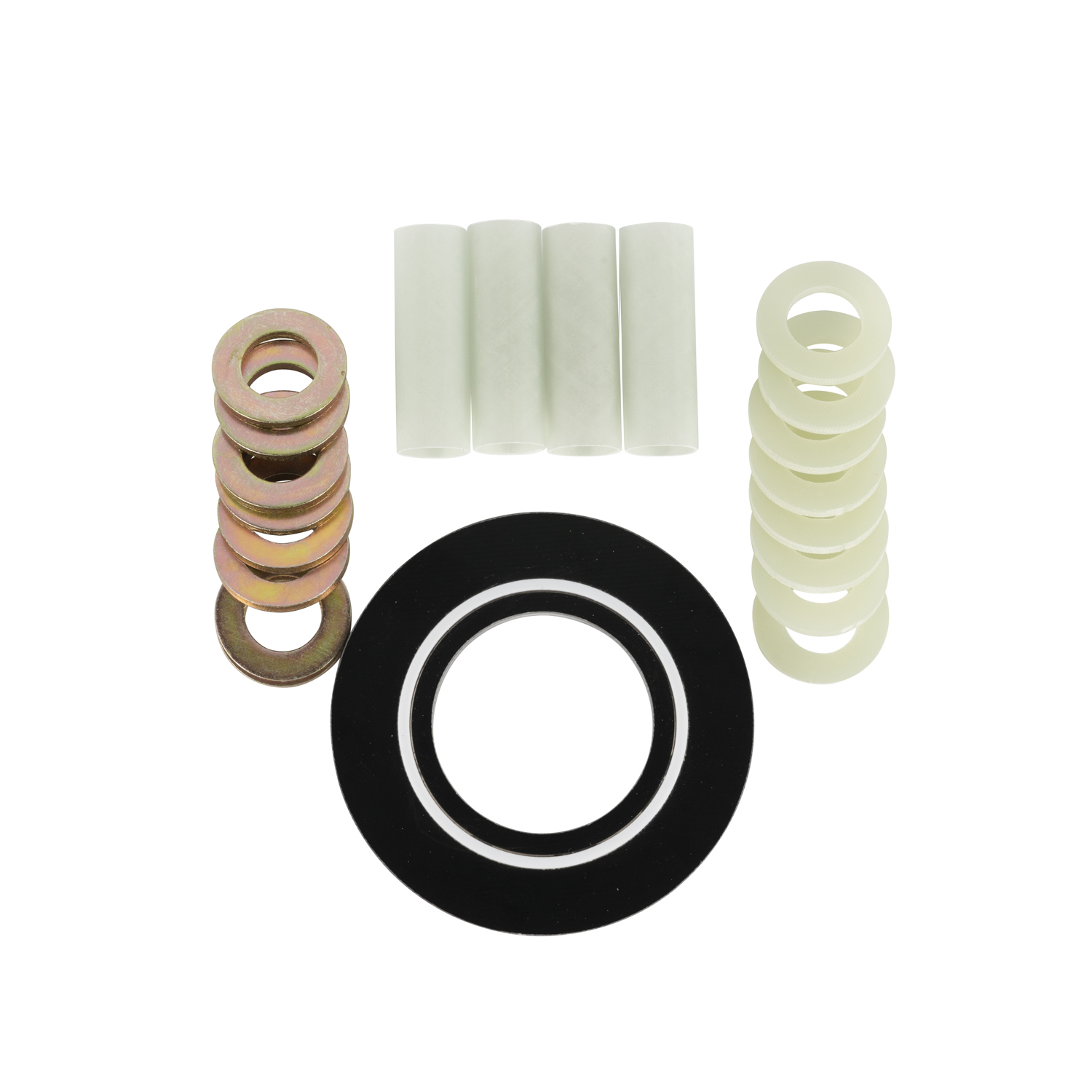
Insulation Kit Components: Designed to electrically isolate flanges, preventing corrosion due to stray currents.
Non-metallic gaskets offer several benefits:
Flexibility: They conform easily to flange surface irregularities, ensuring tight seals even on imperfect surfaces.
Chemical Resistance: Materials like PTFE and graphite resist a wide range of chemicals, acids, and solvents, making them ideal for corrosive fluids.
Cost-Effectiveness: Generally less expensive than metallic gaskets, they reduce upfront costs for moderate-pressure applications.
Ease of Installation: Lightweight and pliable, they simplify handling and fitting during maintenance or assembly.
Good Sealing at Low to Medium Pressure: Suitable for systems where extreme pressure or temperature resistance isn’t required.
Common in water pipelines, HVAC systems, and general industrial uses. Their elasticity allows them to seal well under low pressure and moderate temperature.
Ideal for chemical processing, pharmaceutical, and food industries due to their inertness and resistance to aggressive chemicals. PTFE gaskets prevent contamination and withstand acids and solvents.
Used where high temperatures and chemical exposure occur, such as steam lines and boilers. Graphite’s compressibility and thermal stability provide reliable sealing in demanding environments.
Designed to electrically isolate flanges, reducing corrosion risk by preventing stray currents. Common in pipelines carrying conductive fluids or in cathodic protection systems.
Non-metallic gaskets fit well in moderate environments, including:
Water distribution and municipal pipelines where pressure and temperature are relatively low.
HVAC systems needing flexible, easy-to-install seals for air and fluid ducts.
Chemical plants using PTFE gaskets to handle corrosive chemicals safely.
Food processing and pharmaceutical industries requiring hygienic, contamination-free sealing materials.
Low to medium pressure industrial piping where cost and chemical resistance are priorities over extreme mechanical strength.
They provide reliable sealing where metallic gaskets’ strength isn’t necessary, balancing performance and economy.
Tip: Choose non-metallic gaskets when flexibility, chemical resistance, and cost-efficiency are key, especially in low to medium pressure and temperature systems.
Metallic gaskets excel in extreme temperature conditions. They can withstand from -200°C up to over 600°C, making them suitable for high-temperature steam lines, boilers, and refinery equipment. Non-metallic gaskets, however, generally tolerate moderate temperatures, typically up to 250°C depending on material. For example, rubber gaskets soften above 120°C, while graphite and PTFE can handle higher temperatures but still fall short of metallic limits. Choosing metallic gaskets is essential where heat resistance is critical.
Pressure resistance is another major difference. Metallic gaskets handle very high pressures, often exceeding 1000 psi, making them ideal for high-pressure pipelines, reactors, and steam systems. Non-metallic gaskets suit low to medium pressures, typically below 500 psi. Their softer materials compress easily but can deform under heavy loads. For demanding pressure conditions, metallic gaskets ensure a tight, durable seal that withstands intense mechanical stress.
Cost often influences gasket choice. Metallic gaskets are generally more expensive due to raw materials and manufacturing complexity. Their durability and longevity justify the higher initial investment in critical systems. Non-metallic gaskets offer a lower upfront cost, making them attractive for less demanding applications or where frequent replacement is acceptable. Budget-conscious projects often opt for non-metallic options when operating conditions allow.
Non-metallic gaskets provide greater flexibility. Their softness helps conform to flange surface irregularities, simplifying installation and improving sealing on imperfect surfaces. They are lighter and easier to handle, reducing labor time. Metallic gaskets, being rigid, require precise flange alignment and careful installation to avoid damage. Installation of metallic types like RTJ or spiral wound gaskets often demands skilled technicians and proper tools.
Metallic gaskets find use in:
Oil & gas pipelines and processing units
Petrochemical plants
Power plants and steam systems
Refineries and high-pressure equipment
Non-metallic gaskets are common in:
Water distribution and municipal pipelines
HVAC and low-pressure industrial systems
Chemical plants using PTFE gaskets
Food processing and pharmaceutical industries
Each type suits environments matching their mechanical and chemical resistance profiles.
Tip: Always match gasket type to your system’s temperature and pressure demands to avoid leaks and ensure long-term reliability.
Metallic gaskets play a vital role across industries where sealing under extreme conditions is non-negotiable. Their robust nature makes them the go-to choice for high-pressure, high-temperature, and chemically aggressive environments.
In oil and gas, pipelines transport hydrocarbons over long distances under high pressure. Metallic gaskets, especially RTJ and spiral wound types, provide the reliable, leak-proof seals essential to prevent hazardous leaks. They endure temperature swings and mechanical vibrations common in upstream and downstream operations. Their resistance to corrosion from sour gas and other aggressive fluids also ensures long-term integrity in critical pipeline joints and processing equipment.
Petrochemical plants handle complex chemical reactions and fluid transfers under demanding conditions. Metallic gaskets seal reactors, heat exchangers, and piping systems where pressure and temperature fluctuate rapidly. Spiral wound and metal jacketed gaskets are preferred for their ability to maintain tight seals despite thermal cycling and chemical exposure. This reliability supports safety, minimizes downtime, and protects expensive equipment in these highly sensitive environments.
Power plants rely on boilers, turbines, and steam distribution networks operating at very high temperatures and pressures. Metallic gaskets withstand these extremes, preventing steam leaks that could cause efficiency loss or safety hazards. Corrugated metal and solid metal gaskets often seal flange joints in steam lines and heat exchangers. Their durability reduces maintenance frequency and extends equipment life, crucial for continuous power generation.
Refineries process crude oil into various products under intense pressure and temperature. Metallic gaskets secure critical flange connections in reactors, distillation columns, and pressure vessels. RTJ gaskets are common here due to their tight sealing under high stress and corrosive conditions. Their use prevents leaks of toxic or flammable fluids, ensuring operational safety and compliance with stringent industry standards.
Tip: For high-pressure, high-temperature, or chemically aggressive systems, always select metallic gaskets designed to match your specific industrial environment to ensure safety and long-term reliability.
Non-metallic gaskets are widely used in industries where moderate pressure, temperature, and chemical resistance are required. Their flexibility and cost-effectiveness make them ideal for many applications.
Non-metallic gaskets, especially rubber types, are common in water pipelines and municipal infrastructure. They provide reliable sealing to prevent leaks and maintain pressure stability in water distribution networks. Their elasticity helps seal flange joints even when surfaces are uneven or slightly damaged. These gaskets also resist degradation from water and mild chemicals often found in municipal systems, making them a practical choice for long-term use.
In HVAC systems and other low-pressure industrial setups, non-metallic gaskets like rubber and compressed fiber are preferred. They effectively seal air ducts, water lines, and chilled water piping. Their flexibility allows easy installation and removal during maintenance. These gaskets also help reduce noise and vibration by providing cushioning between metal flanges. Their ability to handle moderate temperatures and pressures suits typical HVAC operating conditions.
PTFE gaskets are especially valuable in chemical plants. Their outstanding chemical resistance allows them to seal pipelines and vessels carrying acids, alkalis, solvents, and other aggressive fluids. PTFE is inert and non-reactive, preventing contamination and gasket degradation. This makes it ideal for corrosive environments where metallic gaskets might corrode or fail. Additionally, PTFE's smooth surface reduces friction, helping maintain seal integrity under fluctuating pressures.
The food and pharmaceutical industries demand hygienic, contamination-free sealing solutions. PTFE and other non-metallic gaskets meet these standards due to their chemical inertness and smooth, non-porous surfaces. They resist microbial growth and withstand frequent cleaning with harsh sanitizers. These gaskets ensure product purity and comply with strict industry regulations. Their flexibility also eases installation in complex piping systems used in these sectors.
Tip: For applications requiring chemical resistance, flexibility, and hygienic sealing, non-metallic gaskets like PTFE provide cost-effective, reliable solutions in moderate temperature and pressure environments.
Selecting the right gasket is crucial for ensuring safety, performance, and long equipment life. Here’s a detailed guide to help you make the best choice based on your system’s specific needs.
First, understand the temperature range your system will face. Metallic gaskets excel in extreme temperatures, often from -200°C to over 600°C. They suit steam lines, boilers, or high-temperature reactors. Non-metallic gaskets like rubber or PTFE handle moderate temperatures, usually up to 250°C. For example, rubber softens above 120°C, so it’s not ideal for hotter environments. Graphite and PTFE can tolerate higher temps but still less than metallic types. Always match gasket material to your max and min operating temperatures to avoid premature failure.
Next, consider pressure conditions. High-pressure systems (above 500 psi) require metallic gaskets such as RTJ or spiral wound types. These withstand heavy loads and maintain tight seals under stress. Non-metallic gaskets suit low to medium pressures, typically below 500 psi. Their softer materials compress easily but may deform under very high pressure. Know your system’s pressure class and choose a gasket designed for that range to prevent leaks or blowouts.
Identify the fluid or gas your system carries. Corrosive or aggressive chemicals demand gaskets resistant to chemical attack. PTFE and graphite are excellent for acids, solvents, and alkalis. Metallic gaskets made from alloys like Monel resist sour gas and corrosive fluids. Inert fluids like water or air allow more flexible choices. Chemical compatibility ensures the gasket won’t degrade, swell, or leak over time, protecting system integrity.
Flange design impacts gasket choice too. Flange surface finish, bolt pattern, and groove presence influence sealing effectiveness. Metallic gaskets like RTJ fit into machined grooves for a precise seal. Non-metallic gaskets flexibly conform to irregular or damaged flange surfaces. Inspect flange condition carefully — rough or uneven surfaces may need flexible gaskets, while smooth, rigid flanges can use metal types. Proper matching reduces installation issues and improves sealing reliability.
Finally, factor in cost versus performance. Metallic gaskets cost more upfront but last longer in harsh conditions, reducing maintenance and downtime. Non-metallic gaskets are cheaper and easier to replace but might need frequent changes in demanding environments. Consider lifecycle costs, including installation, maintenance, and potential downtime. Choose the option that offers the best value for your specific application, balancing safety, reliability, and budget.
Tip: Always prioritize operating conditions and chemical compatibility over initial cost to select gaskets that ensure safety and minimize costly failures in industrial systems.
Selecting the right gasket is crucial. Mistakes can lead to leaks, equipment damage, costly downtime, or even safety hazards. Here are key errors to avoid when choosing gaskets for your industrial applications.
Price matters, but it shouldn’t be the only factor. Cheaper gaskets may not handle the temperature, pressure, or chemicals in your system. This can cause early gasket failure, leaks, and frequent replacements. Investing in the right gasket upfront saves money and prevents costly shutdowns later.
Every fluid or gas has specific chemical properties. Using a gasket material incompatible with these fluids leads to swelling, degradation, or corrosion. Similarly, ignoring the system’s pressure rating risks gasket blowouts or leaks under load. Always verify chemical compatibility charts and pressure ratings before selecting a gasket.
A gasket seals best against a clean, smooth flange surface. Rough, damaged, or uneven flanges reduce sealing efficiency, even if the gasket material is perfect. Skipping flange inspection or repair can cause leaks despite proper gasket choice. Ensure flange faces are prepared and match gasket type, especially for rigid metallic gaskets requiring precise flange conditions.
Gasket selection often involves complex factors like temperature cycles, pressure changes, fluid chemistry, and flange design. Skipping expert advice increases risks of wrong choices. Technical specialists provide guidance on suitable gasket materials, designs, and installation practices tailored to your specific system.
Wrong gasket choice leads to:
Leaks causing product loss or environmental harm
Equipment damage from corrosion or pressure failures
Unplanned downtime and costly repairs
Safety hazards for personnel and surroundings
Reduced lifespan of flanges and piping components
Avoid these outcomes by carefully considering all factors and consulting professionals.
Tip: Never base gasket selection on cost alone; always check chemical compatibility, pressure ratings, and flange condition to ensure safe, reliable sealing and avoid costly failures.
Metallic gaskets offer high strength and temperature resistance, while non-metallic types provide flexibility and chemical resistance. Choosing gaskets based on system conditions ensures safety and reliable sealing. For demanding industrial applications, matching gasket type to pressure, temperature, and fluid is essential. DONHONSIL Gasket Manufacturer delivers high-quality gaskets tailored for diverse needs, enhancing equipment performance and longevity. Their expert support helps select the right gasket, optimizing safety and cost-effectiveness in your operations.
A: A gasket is a sealing material placed between two flange surfaces to prevent leaks. It is crucial for maintaining pressure, temperature resistance, and chemical compatibility in industrial systems.
A: Metallic gaskets offer high strength, durability, and resistance to extreme temperatures and pressures, while non-metallic gaskets provide flexibility, chemical resistance, and cost-effectiveness for moderate conditions.
A: Metallic gaskets are preferred for high-pressure, high-temperature, and corrosive environments due to their superior mechanical strength and longevity.
A: Common errors include choosing based solely on price, ignoring chemical compatibility, overlooking flange condition, and not consulting experts, which can lead to leaks and equipment damage.
A: Non-metallic gaskets are flexible and easier to install on uneven surfaces, while metallic gaskets require precise flange alignment and skilled installation.