Engineered to seal,
The last line of defense against leakage
+86-13566064802

Views: 0 Author: Site Editor Publish Time: 2026-07-09 Origin: Site
The high-stakes reality of oil and gas operations leaves zero room for error. The failure of a single sealing component can lead to catastrophic blowouts, severe environmental disasters, and facility-wide shutdowns. Engineers and procurement specialists face the constant challenge of balancing stringent regulatory compliance with operational efficiency in extreme environments characterized by high pressure, high temperature, and highly corrosive media.
Industrial gaskets act as critical mechanical seals designed to fill microscopic irregularities between mating surfaces. They prevent the escape of hydrocarbons and hazardous fluids during high-pressure transport. Selecting the right gasket is a fundamental engineering requirement that dictates the safety and reliability of the entire system.
This guide serves as a technical evaluation framework to assess, specify, and source industrial gaskets. You will learn how to guarantee long-term flange joint integrity, mitigate operational risk, and ensure compliance with industry standards.
Application Dictates Specification: There is no universal sealing solution; gasket selection must be strictly governed by exact Pressure-Temperature (P-T) ratings and chemical compatibility requirements of the specific operational node.
Compliance is Non-Negotiable: Validating adherence to ASME B16.20, API 6A, and ISO fugitive emission standards is critical for regulatory approval and risk mitigation.
Material Traceability Matters: Counterfeit or substandard materials pose severe safety risks; demanding Material Test Reports (MTRs) and verifiable supply chain documentation is a mandatory procurement step.
Installation Determines Performance: Even the highest-grade gaskets will fail without precise, documented bolt torqueing, flange alignment, and matching flange surface finish protocols.
Table of Contents
The immediate consequences of sealing failure are severe. Hydrocarbon leaks can quickly escalate into blowout events, endangering personnel and destroying infrastructure. In sour gas applications, the release of toxic gases like H2S poses an immediate lethal threat. Environmental contamination from spilled crude or chemical fluids leads to extensive ecological damage and requires massive cleanup efforts. Field operators know that a minor drip on a high-pressure line can atomize combustible fluids, creating an explosive atmosphere in seconds.
Beyond the immediate physical danger, the operational disruption cascades through the entire facility. Emergency shutdowns require complex depressurization sequences, flaring of valuable product, and extensive safety audits before restart. The mechanical stress of sudden shutdowns can also damage adjacent piping and equipment, multiplying the initial failure's impact.
Poor gasket selection carries hidden costs that extend far beyond the initial purchase price. EPA and OSHA impose heavy fines for fugitive emissions and safety violations. Unplanned downtime halts production, costing facilities millions of dollars per day. Premature replacement cycles drain maintenance budgets and increase the risk of secondary failures during repair operations.
Regulatory bodies actively monitor emission levels at flange joints using optical gas imaging and sniffer technologies. Failing an emission audit triggers mandatory repair programs, increased inspection frequencies, and public reporting requirements. The financial burden of compliance failures often dwarfs the cost of specifying premium sealing components from the start.
Midstream operations rely on continuous, leak-free transport across long-distance transmission lines. These pipelines are subject to ground shifting, environmental thermal cycling, and constant physical vibration from pumping stations. Gaskets must absorb these dynamic forces while maintaining a perfect seal to prevent hazardous leaks during transit.
Compressor stations and metering skids present unique challenges. The pulsating flow from reciprocating compressors induces high-frequency vibrations that can loosen flange bolts over time. Gaskets in these locations require high recovery characteristics to maintain seating stress even as the flange faces move microscopically relative to each other.
A successful deployment requires zero-leakage performance under all anticipated operating conditions. The seal must resist thermal cycling without losing compression. Degradation over the maintenance lifecycle must be predictable, allowing for scheduled replacements rather than emergency interventions. Achieving these criteria demands precise material selection and flawless installation.
Engineers evaluate success based on the joint's ability to maintain the target bolt load over time. Relaxation of the gasket material or yielding of the bolts compromises the seal. Successful installations utilize calculated torque values, proper lubrication, and controlled tightening methods to achieve and maintain the optimal seating stress.
Operational extremes dictate material limits. Cryogenic LNG processing requires materials that remain flexible at sub-zero temperatures, while high-heat refining demands alloys that resist creep and oxidation. Engineers must map the specific P-T ratings of the application against the mechanical limits of the chosen gasket design to prevent blowout or thermal degradation.
The relationship between pressure and temperature is inversely proportional for most sealing materials. As temperature increases, the maximum allowable pressure decreases. This P-T curve must be carefully analyzed during the specification process. Relying solely on the maximum pressure or maximum temperature rating independently will lead to catastrophic failure.
Material Type | Typical Temp Range (°C) | Max Pressure (bar) | Primary Application |
|---|---|---|---|
PTFE (Virgin) | -200 to 260 | 80 | Corrosive chemicals, low pressure |
Flexible Graphite | -200 to 450 (oxidizing) | 200+ | High heat, steam, hydrocarbons |
316SS Spiral Wound | -200 to 760 | 250+ | High pressure, thermal cycling |
Inconel RTJ | -100 to 1000+ | 1000+ | Extreme HPHT, sour gas |
Evaluating media aggressiveness is necessary. Sour gas, crude oil, steam, and abrasive particulates attack sealing materials differently. The gasket must resist chemical degradation, swelling, or embrittlement when exposed to the process fluid. Selecting the wrong material leads to rapid seal failure and potential contamination of the process stream.
Concentration and temperature significantly alter chemical aggressiveness. A material resistant to a 10% acid solution at ambient temperature might dissolve rapidly in a 50% solution at 150°C. Comprehensive chemical compatibility charts and material testing are required to validate selections for complex hydrocarbon mixtures.
Gasket material compressibility must match the flange face finish to eliminate micro-leakage pathways. Standard serrated 125-250 AARH finishes require softer facing materials to fill the grooves. Smooth or RTJ finishes demand specific metallic profiles to achieve the necessary seating stress. Mismatching the gasket to the flange finish guarantees a leak.
The surface finish acts as a series of microscopic dams. The gasket material must flow into the valleys of the serrations to block the fluid path. If the gasket is too hard, it rides on the peaks, leaving the valleys open. If the flange is too smooth, a soft gasket may extrude under pressure due to lack of friction.
Structural resilience is vital in high-vibration environments. Sudden pressure surges or water hammer events exert massive forces on the flange joint. The gasket must possess sufficient mechanical strength to resist extrusion or blowout under these dynamic loads, maintaining the seal even when system parameters temporarily exceed normal operating limits.
Blowout resistance is heavily dependent on the friction between the gasket and the flange face, as well as the internal strength of the gasket itself. Designs incorporating metallic cores or outer guide rings provide physical barriers against extrusion, ensuring the sealing element remains contained within the flange joint.
RTJ gaskets excel in high-pressure, high-temperature (HPHT) upstream and midstream applications. They provide a robust metal-to-metal seal. The hardness of the RTJ must be lower than the flange hardness to prevent permanent flange deformation during seating. Profiles include Oval and Octagonal for standard applications, and RX and BX designs for higher pressures and self-energizing capabilities.
The sealing mechanism relies on high localized stress along the contact lines between the ring and the flange groove. This stress causes the softer ring material to yield and conform to the groove surface. Proper handling is essential; any scratch or dent on the sealing surfaces of the ring or the groove will compromise the seal.
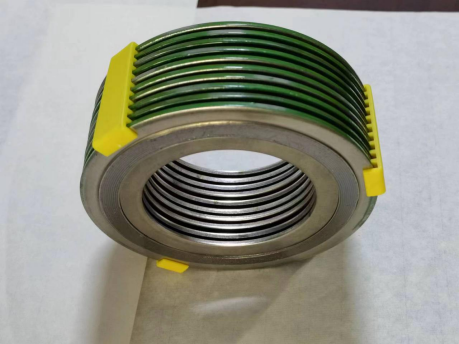
These gaskets offer exceptional versatility. The alternating layers of metal and filler create a spring effect, allowing the seal to adapt to fluctuating thermal and mechanical loads. Inner rings prevent blowout and protect the sealing element from the process media. Outer rings limit compression and ensure proper centering within the bolt circle.
The density of the windings can be adjusted during manufacturing to suit specific seating stress requirements. High-density windings are used for high-pressure applications, while lower density windings accommodate lower bolt loads. The choice of filler material dictates the chemical and thermal limits of the gasket.
Kammprofile gaskets provide high reliability with low seating stress. A solid metal core with concentric grooves is covered by a soft facing material. They outperform spiral wound gaskets in heat exchanger and large vessel applications where flange rotation or low bolt loads are a concern, offering excellent blowout resistance and easy handling.
The grooved core concentrates the bolt load onto a smaller surface area, maximizing the sealing stress on the soft facing material. This design allows for a highly effective seal even on flanges with minor imperfections or limited bolting capacity. The solid core also prevents the inward buckling sometimes seen in large-diameter spiral wound gaskets.
Materials like PTFE, flexible graphite, and compressed non-asbestos fiber serve limited but critical use cases. They are suitable for low-pressure, highly corrosive, or utility applications where metallic gaskets are unnecessary or incompatible. PTFE offers superior chemical resistance, while flexible graphite handles high temperatures, provided oxidation risks are managed.
Elastomeric gaskets, such as Nitrile or Viton, are commonly used in water and low-pressure oil systems. They require very low seating stress but are strictly limited by temperature and chemical compatibility. Proper storage is required to prevent degradation from UV light and ozone exposure before installation.
Standard 316 Stainless Steel offers adequate yield strength and corrosion resistance for many applications. However, aggressive, sour, or offshore environments require exotic alloys. Inconel, Monel, and Duplex stainless steels provide superior resistance to cracking, pitting, and high-temperature degradation, though they come at a higher initial material cost.
The selection of the metallic component must account for both the internal process fluid and the external environment. Offshore platforms expose flanges to salt spray, requiring external corrosion resistance. Subsea applications demand materials immune to hydrogen embrittlement and crevice corrosion in seawater.
Flexible Graphite provides superior heat resistance and conforms well to flange imperfections, but it is vulnerable to oxidation at extreme temperatures. PTFE offers unmatched chemical resistance across a broad pH range but is susceptible to cold flow or creep at elevated temperatures. Selection depends entirely on the specific process media and operating temperature.
Mica is often added to graphite fillers to improve oxidation resistance at high temperatures. For PTFE, adding fillers like glass, barium sulfate, or silica reduces cold flow and improves mechanical stability, allowing its use in higher pressure applications than virgin PTFE.
Galvanic corrosion occurs when dissimilar metals are in contact within a conductive electrolyte. Prevent this by ensuring electrochemical compatibility between the gasket metal, the flange material, and the process fluid. Using insulating sleeves and washers or selecting gasket metals close to the flange material on the galvanic series mitigates this risk.
In piping systems carrying conductive fluids like produced water, the gasket can act as the anode and corrode rapidly if it is less noble than the flange material. Engineers must consult galvanic series charts specific to the process fluid to ensure the selected metals will not create a destructive galvanic cell.
API standards govern upstream operations. API 6A specifies requirements for Wellhead and Christmas Tree Equipment, demanding robust sealing solutions for extreme pressures. API 17D covers Subsea Wellhead and Tree Equipment, where maintenance is nearly impossible, requiring gaskets with flawless long-term reliability and resistance to external seawater corrosion.
Compliance with API standards involves rigorous testing, including pressure cycling, thermal cycling, and exposure to specific test fluids. Manufacturers must maintain strict quality control and traceability to certify their products to these demanding specifications.
ASME codes dictate piping system integrity. ASME B16.20 covers metallic gaskets for pipe flanges, including ring-joint, spiral-wound, and jacketed designs. ASME B16.21 specifies dimensions for non-metallic flat gaskets. Adherence to these dimensional and material standards ensures interchangeability and predictable performance across diverse piping networks.
ASME Boiler and Pressure Vessel Code (BPVC) Section VIII provides the design rules for pressure vessels, including the calculation of required bolt loads and flange thicknesses based on the selected gasket factors (m and y values). Accurate gasket data is essential for safe vessel design.
Global capital projects require compliance across borders. US standards like ASME and API often intersect with European and international equivalents such as EN 1514, EN 1092-1, and DIN standards. Understanding the nuances between these codes ensures that specified gaskets meet the regulatory requirements of the installation location, avoiding costly delays and rework.
While dimensional standards may differ, the underlying engineering principles remain consistent. Engineers must cross-reference material specifications and testing protocols to ensure a gasket certified to an ASME standard meets the equivalent performance requirements of the applicable EN or ISO standard.
Reducing Volatile Organic Compound (VOC) emissions is a primary EPA mandate. Modern Gaskets undergo rigorous testing and certification to meet these demands. Standards like ISO 15848, API 622, and API 641 define testing protocols for fugitive emissions, ensuring that sealing components maintain ultra-low leak rates over extended operational cycles.
Low-emission gaskets often utilize specialized graphite formulations or highly engineered PTFE profiles to achieve tight seals. Facility operators must specify these certified components in their piping classes to comply with local environmental regulations and avoid costly emission penalties.
Installation error accounts for the majority of joint failures. Even the best gasket will leak if installed incorrectly. Technicians must use calibrated torque wrenches to achieve the specified bolt load. Proper lubrication of threads and nut faces is essential. Following a standardized cross-bolt tightening sequence ensures even compression and prevents flange distortion.
Inspect flange faces for damage, scratches, or pitting.
Align flanges to ensure they are parallel and concentric.
Lubricate bolt threads and nut bearing surfaces with an approved anti-seize compound.
Install bolts and hand-tighten nuts.
Apply torque in a star or cross pattern in multiple passes (e.g., 30%, 60%, 100% of target torque).
Perform a final circular pass at 100% target torque to ensure uniform loading.
Pipeline vibrations, water hammer, and thermal expansion cause joint relaxation and bolt yield. Mitigate these risks by selecting gaskets with high recovery characteristics, such as spiral wound or Kammprofile designs. Implementing live-loading systems with Belleville washers helps maintain bolt tension during thermal cycling and dynamic pressure events.
Proper pipe support and anchoring are also critical. Excessive piping loads transferred to the flange joint will overcome the bolt tension and cause the gasket to leak. Stress analysis of the piping system must account for all dynamic loads to ensure the flange joints remain within their design limits.
Counterfeit gaskets plague the industry, posing severe safety risks. Audit vendors strictly for ISO 9001 certification. Demand fully traceable Material Test Reports (MTRs) for every batch of metallic components. Verifying the chemical composition and mechanical properties of the supplied materials ensures they meet the specified engineering requirements.
Visual inspection upon receipt is mandatory. Check for correct color-coding on spiral wound gaskets, verify dimensional tolerances, and ensure all required markings (manufacturer, material, standard) are present and legible. Reject any components that lack proper documentation or show signs of poor manufacturing quality.
Implement predictive maintenance programs to monitor joint integrity. Conduct thorough visual inspections during scheduled turnarounds to identify signs of degradation or minor leaks before they escalate. Enforce a strict never reuse a crushed gasket rule; once a gasket has been compressed, its sealing properties are permanently altered and compromised.
Track flange joint maintenance history in a computerized maintenance management system (CMMS). Documenting the torque values applied, the specific gasket installed, and the condition of the flange faces provides valuable data for troubleshooting recurring leaks and optimizing future maintenance intervals.
Audit your current flange joint failure rates to identify systemic issues and prioritize high-risk nodes for immediate upgrade.
Consolidate your vendor list to manufacturers who provide comprehensive engineering support, transparent material sourcing, and certified compliance documentation.
Implement mandatory training for all maintenance personnel on proper flange alignment, lubrication, and cross-bolt tightening sequences.
Update your procurement specifications to require verifiable Material Test Reports (MTRs) for all metallic sealing components.
As an industry-leading global authority in high-performance fluid containment technology and elite petrochemical sealing elements, Dongheng custom-manufactures a comprehensive portfolio of advanced industrial gaskets engineered to withstand extreme high-pressure, high-temperature (HPHT) and sour gas environments. Utilizing premier metallurgies, strict ISO 9001 quality controls, and verifiable material traceability, the enterprise ensures exceptional blowout resistance and zero-leakage safety for critical energy infrastructure worldwide.
A: Spiral wound gaskets use alternating layers of metal and filler for a resilient seal suitable for fluctuating temperatures. RTJ gaskets are solid metal rings that wedge into flange grooves, providing a high-integrity metal-to-metal seal for extreme pressure and temperature applications.
A: Sour gas requires materials highly resistant to sulfide stress cracking. Exotic alloys like Inconel or specific grades of stainless steel are necessary for the metallic components, paired with chemically inert fillers like PTFE or specialized graphite, depending on the temperature.
A: ASME B16.20 compliance ensures that metallic gaskets, including spiral wound and RTJ types, meet strict dimensional, material, and marking standards. This guarantees interchangeability and reliable performance within standard ASME pipe flanges.
A: PTFE deforms or creeps under continuous mechanical stress, especially at elevated temperatures, leading to loss of bolt load and leakage. Prevent cold flow by using modified or filled PTFE, or by confining the PTFE within a metallic structure like a Kammprofile or spiral wound design.
A: No. Once a spiral wound gasket is compressed, the metal windings permanently deform to fill the flange imperfections. Reusing it will not provide an effective seal and significantly increases the risk of a dangerous leak.
A: Gaskets certified to low-emission standards like ISO 15848 or API 622 are best. Kammprofile gaskets with high-density graphite facing or specially designed spiral wound gaskets with inner and outer rings offer excellent low-emission performance.
A: The surface finish dictates how well the gasket material can conform and fill the microscopic gaps. A mismatch prevents proper seating and creates leak paths. The gasket compressibility must align with the flange roughness.