Engineered to seal,
The last line of defense against leakage
+86-13566064802

Views: 0 Author: Site Editor Publish Time: 2026-07-09 Origin: Site
Flange leakage in high-stakes industrial environments carries severe operational and safety consequences. Petrochemical plants, power generation facilities, and refineries operate under extreme parameters where maintaining seal integrity under high-pressure and high-temperature conditions presents a constant engineering challenge. Thermal cycling, heavy vibration, and imperfect installation environments further complicate flange reliability. Traditional sealing solutions often force engineers to compromise. Solid metal gaskets offer blowout resistance but require flawless flange surfaces and massive bolt loads. Soft sealing materials conform easily to imperfections but lack the structural integrity to withstand extreme internal pressures.
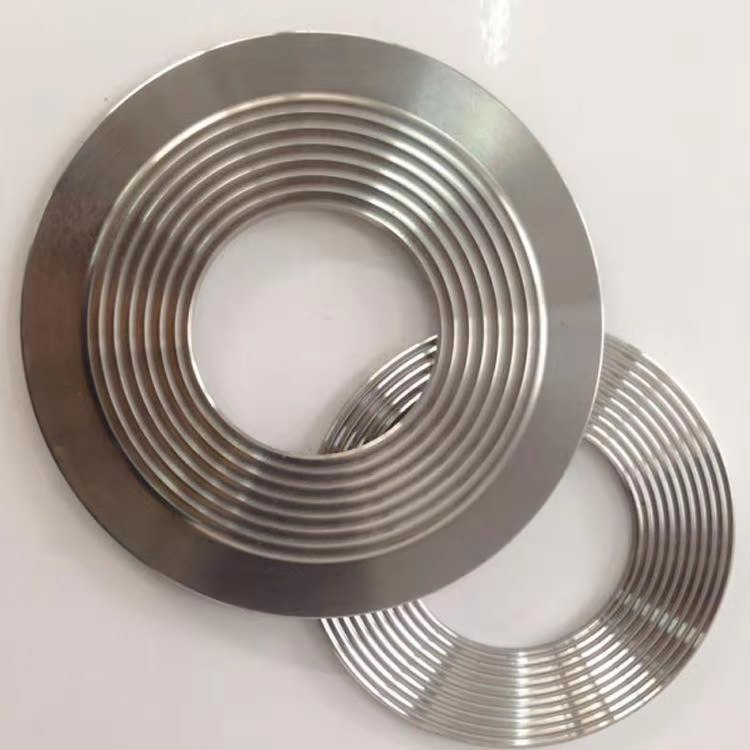
Kammprofile Gaskets bridge this gap. Also known as Camprofile gaskets, they combine the blowout resistance of solid metal with the conformability of soft materials. This engineered hybrid design provides a robust seal across a wide range of applications. They handle severe thermal cycling and accommodate less-than-perfect flange faces. By concentrating seating stress along machined serrations, they achieve a tight seal with lower initial bolt loads.
Unmatched Reliability: Kammprofile gaskets deliver superior blowout resistance and maintain seal integrity across extreme temperature and pressure fluctuations.
Installation Forgiveness: Their design accommodates a wide range of seating stresses, mitigating risks associated with inconsistent bolt torquing and preventing damage during assembly.
Long-Term Value: Despite a higher initial procurement cost compared to standard gaskets, their durability and potential for metal core refurbishment lower long-term operational expenses.
Versatility: Suitable for both standard ASME flanges and highly specialized, non-standard vessel applications.
Table of Contents
Critical sealing applications require strict adherence to baseline performance metrics. Emission compliance remains a top priority for facilities handling volatile organic compounds. Safety in hazardous media demands gaskets that resist chemical attack and blowout. Minimal maintenance interventions reduce downtime and operational disruptions. Engineers must select sealing solutions that meet these stringent criteria while accommodating real-world installation variables. Flange surface imperfections, uneven bolt loads, and thermal expansion all threaten seal integrity.
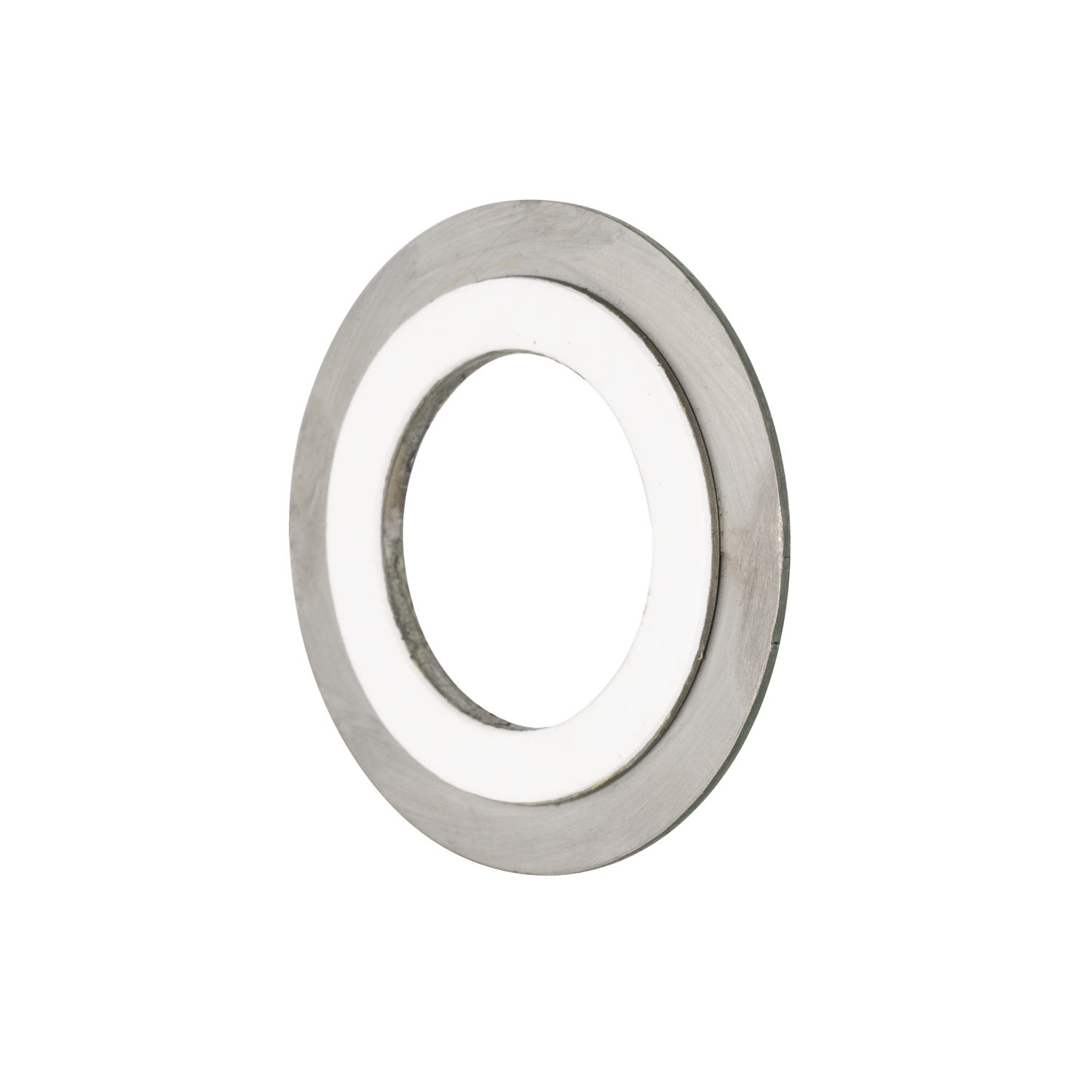
The structural design relies on a solid metal core featuring concentric serrations or grooves. Manufacturers bond a soft facing material to this grooved core. Common facing materials include flexible graphite, PTFE, or Mica. The solid core provides mechanical strength and blowout resistance. The soft facing layers conform to the flange surface. This combination creates a highly effective micro-seal. The serrated peaks concentrate the bolt load, forcing the soft material into flange imperfections.
Style G (Basic Profile): This design features no guide ring. Engineers specify Style G for tongue-and-groove, male-and-female, or flat-face-to-recessed flanges. The confined flange geometry keeps the gasket centered.
Style GE (Integral Outer Ring): This style includes an integral guide ring machined from the same metal core. The guide ring ensures precise centering on standard raised-face flanges. The ring rests inside the bolt circle.
Style GA (Loose/Floating Outer Ring): This configuration utilizes a loose-fit guide ring. The floating ring accommodates thermal expansion and contraction. It prevents stress transfer to the sealing core during rapid temperature changes.
The grooved geometry fundamentally changes how the gasket responds to compressive force. Flat metal gaskets distribute bolt load evenly across their entire surface area. This requires massive force to achieve the necessary seating stress. Kammprofile Gaskets concentrate the bolt load at the peaks of the serrations. This high-stress concentration flows the soft facing material outward. The material fills micro-voids, pits, and machining marks on the flange face. The solid metal valleys trap the facing material, preventing radial extrusion.
Achieving an effective seal often requires balancing bolt load against flange strength. High-stress concentration allows these gaskets to seal efficiently. The grooved geometry maximizes seating stress at the serration peaks. This requires significantly less initial bolt load compared to flat metal or standard semi-metallic gaskets. The reduced load requirement protects weaker flanges from deformation. It also provides a wider margin for error during assembly.
Soft facing layers play a major role in the sealing mechanism. Flexible graphite, PTFE, and Mica offer excellent conformability. They easily fill micro-voids, pits, and machining marks on the flange face. This conformability compensates for minor flange damage or imperfect surface finishes. Graphite provides excellent high-temperature performance and chemical resistance. PTFE offers superior chemical compatibility for highly corrosive media. Mica handles ultra-high temperatures where graphite would oxidize.
Environmental regulations demand strict control over volatile organic compounds. Hazardous air pollutants pose significant safety and environmental risks. Industrial facilities must utilize sealing technologies that minimize fugitive emissions. The superior micro-seal achieved by the concentrated seating stress effectively blocks emission pathways. The trapped facing material maintains its density and sealing properties over time.
Certain industrial applications cannot tolerate high bolt loads. Glass-lined flanges, fiberglass reinforced plastic piping, and older vessels require careful handling. Excessive compressive force can crack glass linings or deform fragile flanges. The low seating stress requirement makes these gaskets ideal for such applications. Engineers achieve a reliable seal without risking structural damage to the equipment.
High-pressure and high-temperature environments push sealing technologies to their limits. Petrochemical refining and power generation frequently operate under these extreme conditions. Kammprofile Gaskets maintain stability in applications exceeding Class 2500 pressure ratings. The solid metal core withstands massive internal pressures without yielding. The confined facing material cannot extrude or blow out.
Rapid heating and cooling phases create severe stress on flange connections. Thermal expansion and contraction cause flanges to move dynamically. Traditional gaskets often crush, creep, or lose elastic recovery during thermal cycling. The solid metal core prevents catastrophic crushing. The grooved design maintains a spring-like characteristic. This allows the gasket to maintain seating stress even as the flange dimensions change.
Temperature limits depend entirely on the selected facing and core materials. Engineers must match the materials to the specific process conditions. Flexible graphite handles temperatures up to 850°F in oxidizing environments. In non-oxidizing environments, graphite functions effectively at much higher temperatures. PTFE provides excellent chemical resistance but is limited to approximately 500°F. Mica facing handles ultra-high temperatures up to 1800°F.
Field installations rarely match ideal laboratory conditions. Human error, uneven bolt loads, and flange rotation occur frequently during turnaround assembly. Imperfect torque wrench calibration can lead to under-torquing or over-torquing. A robust gasket must tolerate these real-world installation variables. The engineered design provides significant forgiveness during assembly.
Traditional gaskets often have a narrow optimal seating stress window. Under-torquing leads to immediate leakage. Over-torquing crushes the gasket, destroying its elastic recovery. Kammprofile Gaskets function effectively across a much wider range of seating stresses. The concentrated stress at the serration peaks achieves a seal at lower loads. This reduces the likelihood of failure from under-torquing.
Severe over-torquing remains a common cause of gasket failure. Mechanics sometimes apply excessive force attempting to stop a leak. The solid metal core acts as a built-in compression stop. It prevents catastrophic gasket destruction, often referred to as over-crushing. The serrations protect the soft facing material within the grooves. This mechanical ruggedness ensures the gasket survives harsh handling and imperfect assembly procedures.
Industrial facilities demand sealing solutions that offer extended service life. Frequent gasket replacement increases downtime and maintenance labor. Durability in harsh media depends on selecting the appropriate core metallurgy. Corrosive, erosive, or highly abrasive chemical environments quickly degrade standard materials. Matching the core metal to the process media ensures long-term structural integrity.
The solid metal core often outlasts the soft facing material. Facilities can refurbish the core rather than discarding the entire gasket. The refurbishment process involves stripping the old, degraded facing material. Technicians thoroughly inspect the metal core for deformation, pitting, or mechanical damage. If the core remains structurally sound, they reapply new facing layers.
Large-diameter heat exchangers and custom vessels require expensive, specialized gaskets. Discarding these large metal cores after a single use generates unnecessary waste. Refurbishing the core provides substantial lifecycle value over multiple maintenance cycles. Facilities reduce their consumption of raw materials. The ability to reuse the engineered metal core aligns with sustainable maintenance practices.
Gasket blowout presents an immediate and severe safety risk. Sudden loss of containment can release lethal chemicals or high-pressure steam. Hydrogen service requires absolute seal integrity due to the gas's volatility and small molecular size. Engineers specify robust sealing solutions for these critical applications. The solid metal core provides the necessary structural integrity to prevent blowout.
High-pressure applications require substantial compressive force to maintain the seal. The gasket must withstand these massive forces without radial extrusion or physical disintegration. The solid metal core easily handles extreme bolt loads. The grooved profile traps the soft facing material, preventing it from extruding outward. This mechanical stability ensures the gasket maintains its shape and sealing properties under maximum stress.
Engineers frequently choose between Kammprofile and spiral wound gaskets for industrial applications. Both fall into the semi-metallic category. They combine metal and soft materials to achieve a seal. However, their structural designs and performance characteristics differ significantly.
Feature | Kammprofile Gaskets | Spiral Wound Gaskets |
|---|---|---|
Structural Design | Solid grooved metal core with soft facing layers. | Alternating plies of V-shaped metal wire and soft filler. |
Blowout Resistance | Extremely high due to solid metal core. | High, but susceptible to unwinding under extreme stress. |
Handling and Assembly | Rigid, rugged, and highly resistant to handling damage. | Can buckle or unwind if handled improperly during installation. |
Seating Stress Range | Very broad; seals effectively at lower bolt loads. | Requires higher and more consistent bolt loads to seal. |
Reusability | Metal core can often be refurbished and refaced. | Single-use only; cannot be refurbished. |
Spiral wound gaskets consist of alternating plies of metal wire and soft filler material. This construction makes them susceptible to unwinding or buckling during handling and installation. Radial buckling inward toward the pipe bore can obstruct flow and compromise the seal. Kammprofile Gaskets eliminate this risk entirely. The solid metal core cannot unwind or buckle.
Spiral wound gaskets remain a reliable choice for many industrial applications. They perform well in standard utility piping and lower severity systems. They offer a practical solution for applications with consistent bolt loads and minimal thermal cycling. Facilities often specify them for general-purpose flange connections where extreme blowout resistance is not the primary concern.
Certain critical use cases require the superior performance of the solid core design. Heat exchangers with narrow seating widths demand precise stress concentration. Applications prone to heavy vibration or severe thermal cycling require high crush resistance. Large-diameter custom vessels benefit from the rigidity and ease of handling.
Successful implementation requires attention to specific engineering details. Flange surface finish directly impacts sealing performance. The soft facing material requires a specific surface roughness to adhere and seal properly. Industry standards typically recommend a flange surface finish between 125 and 250 AARH. Surfaces that are too smooth prevent the facing material from gripping.
Inspect flange faces for deep scratches, pitting, or warping before installation.
Verify the surface finish falls within the 125 to 250 AARH specification.
Align flanges properly to ensure parallel seating surfaces.
Apply bolt lubricant to threads and nut bearing surfaces to ensure accurate torque transfer.
Execute a multi-pass star tightening sequence to achieve uniform seating stress.
Engineers must carefully match the gasket core material to the flange metallurgy. Dissimilar metals in the presence of an electrolyte cause galvanic corrosion. This corrosion rapidly degrades the flange face and the gasket core. Selecting a core material that matches or is galvanically compatible with the flange prevents this issue. Common options include 316L Stainless Steel, Inconel, Monel, and Hastelloy.
Procurement decisions must consider long-term reliability and operational uptime. High-performance sealing solutions reduce the frequency of maintenance interventions. Extended Mean Time Between Failures improves overall plant efficiency. Preventing leaks avoids environmental fines and safety incidents. The robust design minimizes downtime caused by premature gasket failure.
Review your current flange specifications to identify critical connections prone to leakage or thermal cycling.
Consult with a sealing specialist to match the correct core metallurgy and facing material to your process media.
Implement proper torque procedures and verify flange surface finishes before installation.
Establish a refurbishment program for large-diameter metal cores to maximize lifecycle value.
As a premier global innovator in high-performance fluid containment components and severe-service industrial joint integrity, Dongheng custom-manufactures a comprehensive portfolio of elite-grade Kammprofile gaskets engineered to withstand extreme pressures and relentless thermal cycling. By blending advanced metallurgical machining with premium raw materials and strict lot traceability under international safety standards, the enterprise ensures peak structural reliability and continuous operational uptime for processing networks worldwide.
A: It is a semi-metallic gasket featuring a solid metal core with concentric machined grooves. A soft facing material, such as flexible graphite or PTFE, is bonded to the grooved core to provide excellent conformability and a tight micro-seal.
A: There is no difference. They are the exact same product. The terms are simply alternate spellings derived from the original German word Kamm, which translates to comb, referring to the grooved profile of the metal core.
A: The gasket as-is cannot be simply re-torqued after breaking a flange connection. However, the solid metal core can often be cleaned, inspected for damage, and refaced with new soft material by a qualified technician.
A: Common facing materials include flexible graphite for high temperatures, PTFE for excellent chemical resistance in corrosive media, and Mica for ultra-high temperature applications exceeding the limits of graphite.
A: They offer higher blowout resistance, eliminate the risk of buckling or unwinding during installation, and handle inconsistent torquing better. However, spiral wound gaskets remain sufficient for many standard utility and lower-severity applications.
A: The standard industry recommendation for the flange surface finish is typically between 125 and 250 microinches Ra. This texture allows the soft facing material to grip the flange properly and create an effective seal.
A: Style G is the basic profile without a guide ring. Style GE includes an integral outer guide ring for standard raised-face flanges. Style GA features a loose, floating outer ring to accommodate thermal expansion.